
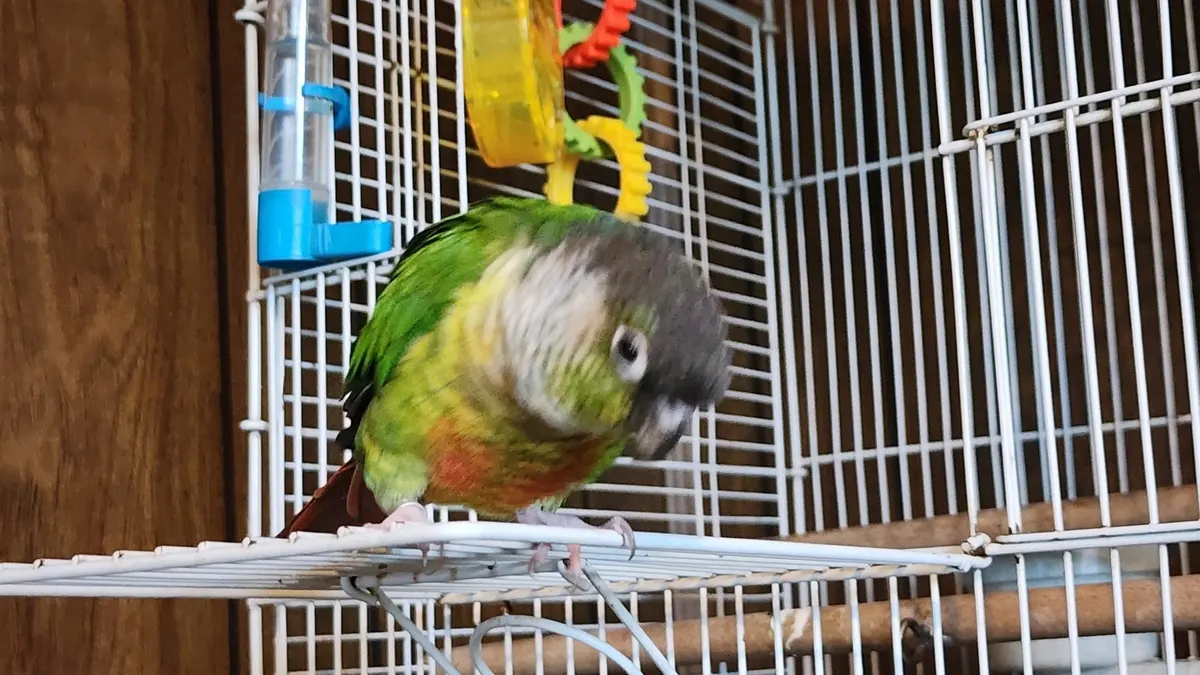
Best Conure Toys of 2026, Sized for Green Cheeks, Suns and Other Conures
Affiliate disclosure: product links on this page go to Amazon or to the maker's own store. As an Amazon Associate we earn from qualifying purchases, and VEVOR pays us a commission on sales through our VEVOR links, at no extra cost to you; links to other makers' stores earn us nothing. No retailer or brand sees our picks before they are published or has any say in them. How we choose.
The best conure toys are the ones a conure can take apart. Lafeber's answers for new conure owners say conures enjoy foraging for things to chew and eat, need swings, boings, ladders, bells and foot toys for exercise, and need a constant supply of softwood, cardboard and paper toys to destroy. Our top pick covers foraging and chewing in one toy: the Super Bird Creations Wicker Foraging Basket, a bamboo basket of vine sticks, loofah slices and woven palm leaves listed for medium conures. Add the Paper Party for paper, the Flying Trapeze as the swing, and Bonka's sola balls as foot toys.
Green cheeks get their own notes throughout, because Lafeber calls them small conures and VCA puts their genus at 55 to 70 grams on average, against 100 to 200 grams for sun-type conures. Every pick was checked against Lafeber's veterinary toy-safety handout, and the section on snuggle huts explains why none of the picks is one.
Our top picks at a glance
- Super Bird Creations SB669 Wicker Foraging Basket (medium birds)
Conure size: Medium conures, ringnecks, Quakers (per the Amazon listing) · Material: Bamboo basket, vine sticks, loofah slices, woven palm leaves (per the Amazon listing) · Play type: Foraging, chewing (destructible) · Size: 10 x 4 x 5 in (per the Amazon listing)
- Super Bird Creations SB301 Chewable Paper Party
Conure size: Ringnecks, medium conures and larger (per the Amazon listing) · Material: Pine block, rolled paper sticks (per the Amazon listing) · Play type: Chewing, shredding (destructible) · Size: 6.5 x 1.5 x 1.5 in (per the Amazon listing)
- Super Bird Creations SB748 Flying Trapeze (medium birds)
Conure size: Medium conures, ringnecks, Quakers, Senegals (per the Amazon listing) · Material: Seagrass mat on multi-colored chain (per the Amazon listing) · Play type: Swing, rest, chewing · Size: 14 x 13 x 12 in (per the Amazon listing)
4. Best shredder for the sleeping perch
Planet Pleasures Pineapple Foraging Toy, MediumConure size: Medium sized birds (per the Amazon listing) · Material: Colored palm leaves (per the Amazon listing) · Play type: Shredding, preening, foraging · Size: 7 x 2.5 x 2.5 in (per the maker)
- Bonka 1214 Sola Atta Balls, 3-pack
Conure size: Small and medium birds (per the Amazon listing) · Material: Sola plant pith (per the Amazon listing) · Play type: Foot toy, shredding · Size: 2.25 to 2.5 in across, 3 per pack (per the Amazon listing)
6. Best for conures that eat their toys
Super Bird Creations SB751 PVC Forager (medium to large birds)Conure size: Ringnecks, medium conures, Quakers and larger (per the Amazon listing) · Material: Drinking-water-grade PVC, plastic beads (per the Amazon listing) · Play type: Foraging (non-destructible) · Size: 3 x 5 x 8 in (per the Amazon listing)
| Pick | Conure size | Material | Play type | Size | Buy |
|---|---|---|---|---|---|
| Super Bird Creations SB669 Wicker Foraging Basket (medium birds)Best overall | Medium conures, ringnecks, Quakers (per the Amazon listing) | Bamboo basket, vine sticks, loofah slices, woven palm leaves (per the Amazon listing) | Foraging, chewing (destructible) | 10 x 4 x 5 in (per the Amazon listing) | Amazon |
| Super Bird Creations SB301 Chewable Paper PartyBest paper chew | Ringnecks, medium conures and larger (per the Amazon listing) | Pine block, rolled paper sticks (per the Amazon listing) | Chewing, shredding (destructible) | 6.5 x 1.5 x 1.5 in (per the Amazon listing) | Amazon |
| Super Bird Creations SB748 Flying Trapeze (medium birds)Best swing | Medium conures, ringnecks, Quakers, Senegals (per the Amazon listing) | Seagrass mat on multi-colored chain (per the Amazon listing) | Swing, rest, chewing | 14 x 13 x 12 in (per the Amazon listing) | Amazon |
| Planet Pleasures Pineapple Foraging Toy, MediumBest shredder for the sleeping perch | Medium sized birds (per the Amazon listing) | Colored palm leaves (per the Amazon listing) | Shredding, preening, foraging | 7 x 2.5 x 2.5 in (per the maker) | Amazon |
| Bonka 1214 Sola Atta Balls, 3-packBest foot toy | Small and medium birds (per the Amazon listing) | Sola plant pith (per the Amazon listing) | Foot toy, shredding | 2.25 to 2.5 in across, 3 per pack (per the Amazon listing) | Amazon |
| Super Bird Creations SB751 PVC Forager (medium to large birds)Best for conures that eat their toys | Ringnecks, medium conures, Quakers and larger (per the Amazon listing) | Drinking-water-grade PVC, plastic beads (per the Amazon listing) | Foraging (non-destructible) | 3 x 5 x 8 in (per the Amazon listing) | Amazon |
Foraging and chewing in one natural toy: a bamboo basket of vine, loofah and palm, listed for medium conures.
- Conure size
- Medium conures, ringnecks, Quakers (per the Amazon listing)
- Material
- Bamboo basket, vine sticks, loofah slices, woven palm leaves (per the Amazon listing)
- Play type
- Foraging, chewing (destructible)
- Size
- 10 x 4 x 5 in (per the Amazon listing)
Pros
- Covers the two needs Lafeber lists first for conures: foraging and chewing
- Every named material is natural: bamboo, vine, loofah, palm
- Sold by Super Bird Creations and shipped by Amazon; assembled in the USA (per the Amazon listing)
Cons
- Specs only from the listing; Super Bird's own site did not load on October 24, 2026
- Colored pieces, and the dye is not described
- The listing does not describe the hanging hardware, so check it against the connector rule below
Lafeber's page of answers for new conure owners says conures enjoy foraging for things to chew and eat, and that their need to chew calls for a constant supply of chew-and-destroy toys made of softwood, cardboard or paper. The Wicker Foraging Basket is both kinds of toy at once: a bamboo basket holding vine sticks, loofah slices and woven palm leaves, 10 x 4 x 5 inches, listed for ringnecks, medium conures, Quakers, caiques and pionus (per the Amazon listing).
Tuck a few of your conure's usual pellets among the pieces so the first visits pay off; our conure food guide covers what those should be. Lafeber's toy chapter says to take out any food other than nuts, dried fruit or seeds before it spoils. Expect the basket to be wrecked: the handout calls destroying toys their purpose. The listing does not name green cheeks, which Lafeber calls small conures; if yours ignores the basket, the sola balls and the small pineapple below are softer places to start.
Best paper chew
Super Bird Creations SB301 Chewable Paper Party
A pine block wrapped in rolled paper sticks: a small, inexpensive paper chew to replace every time it is shredded.
- Conure size
- Ringnecks, medium conures and larger (per the Amazon listing)
- Material
- Pine block, rolled paper sticks (per the Amazon listing)
- Play type
- Chewing, shredding (destructible)
- Size
- 6.5 x 1.5 x 1.5 in (per the Amazon listing)
Pros
- Paper and pine, both on Lafeber's list of conure chew materials
- Sold by Amazon.com
- Small and inexpensive enough to replace often
Cons
- Listed for birds up to mini macaws, so it is not sized for conures alone
- Colored sticks; the listing does not describe the color source
- Hanging hardware not described in the listing
Paper is on Lafeber's short list of what conure chew toys should be made of, with softwood and cardboard. The Paper Party is a pine block with tightly rolled paper lollipop sticks, 6.5 x 1.5 x 1.5 inches, listed for ringnecks and medium conures up through greys, eclectus and mini macaws (per the Amazon listing).
It is small, so treat it as a consumable and keep a spare to swap in. Pine is one of the soft woods Lafeber's toy chapter names for smaller birds and lighter chewers, so a green cheek can work on the block as well as the paper. A conure that shreds the paper and drops it is using the toy as intended; one that swallows the pieces should have the non-destructible PVC Forager below instead.
A swinging seagrass platform for sun conures and other medium conures, with a Mini version sized for green cheeks.
- Conure size
- Medium conures, ringnecks, Quakers, Senegals (per the Amazon listing)
- Material
- Seagrass mat on multi-colored chain (per the Amazon listing)
- Play type
- Swing, rest, chewing
- Size
- 14 x 13 x 12 in (per the Amazon listing)
Pros
- A swing and a chew in one, covering the first exercise toy on Lafeber's conure list
- Replaceable seagrass mat (per the Amazon listing)
- A Mini version for green cheeks
Cons
- The listing does not say what the chain is made of
- At 14 inches across it needs a roomy cage
- Seagrass is a fiber; remove it from a bird that eats it
Lafeber's conure answers name swings first among the exercise toys, and Lafeber's toy chapter says a parrot should have a swing, ladder or similar "mover and shaker" in its cage at all times. Super Bird's Flying Trapeze is a seagrass mat hung from multi-colored chain, 14 x 13 x 12 inches, listed for ringnecks, medium conures, Quakers, caiques, pionus and Senegals (per the Amazon listing). The listing says the seagrass mat is easily replaceable.
For a green cheek, the Mini Flying Trapeze is the closer size: 6 x 7 x 9 inches, listed for parrotlets, parakeets, cockatiels and lovebirds, with plastic chain (per its Amazon listing). Hang either one where it does not block the bird's path between perches. An Ask Lafeber answer says green cheeks tend to eat the fibers of fabric huts, so watch for the same habit with seagrass and take the swing out if the bird swallows it rather than dropping the bits.
Best shredder for the sleeping perch
Planet Pleasures Pineapple Foraging Toy, Medium
Natural palm a conure can shred and preen, 7 inches long, to hang by the night perch instead of a hut.
- Conure size
- Medium sized birds (per the Amazon listing)
- Material
- Colored palm leaves (per the Amazon listing)
- Play type
- Shredding, preening, foraging
- Size
- 7 x 2.5 x 2.5 in (per the maker)
Pros
- All natural, per the maker
- Treats hide in the gaps, so it doubles as a forager
- Comes in four sizes, so the Small fits a green cheek
Cons
- Colors vary and the dye is not described
- Fibers wear loose; check it daily
- The maker gives no species for any size
Lafeber's toy chapter calls toys a bird can preen, shred and weave "Preeners", says they can be stress reducers, and says they are best hung close to the bird's face near a roosting or nighttime perch. Planet Pleasures' pineapple is that kind of toy: colored palm leaves (per the Amazon listing) formed into a pineapple with gaps for hiding treats. The maker's size chart gives the Medium as 7 x 2.5 x 2.5 inches, and the listing calls it great for medium sized birds.
The spot by the night perch is where many owners would hang a snuggle hut, which is why we suggest this toy for it; the hut section below explains. For a green cheek, the Small at 5 x 2 x 2 inches is the matching size. Check the fibers daily and take the toy away from a bird that eats them rather than dropping them.
Best foot toy
Bonka 1214 Sola Atta Balls, 3-pack
Light sola balls with no hardware for a conure to carry, wrestle and shred, soft enough for a green cheek.
- Conure size
- Small and medium birds (per the Amazon listing)
- Material
- Sola plant pith (per the Amazon listing)
- Play type
- Foot toy, shredding
- Size
- 2.25 to 2.5 in across, 3 per pack (per the Amazon listing)
Pros
- No chain, clip or bell
- Soft enough for a green cheek to shred
- Sold by Bonka Bird Toys and shipped by Amazon
Cons
- Soft, so they do not last
- Natural material, so sizes vary slightly
- They need a bowl or a skewer; they do not hang on their own
Foot toys are on Lafeber's conure list, and its toy chapter notes that some parrots love to play on their backs and wrestle with them; Lafeber's sun conure profile describes suns lying on their backs as part of their clowning. Bonka's sola balls are three balls of sola pith, the soft stem of the sola plant, about 2.25 to 2.5 inches across (per the Amazon listing), with nothing metal on them.
Put them in a toy bowl, as the chapter suggests, so the conure can pick one up when it wants, or keep them on a play stand for time out of the cage. Sola is soft, so expect to replace them; that softness is also why they suit a green cheek's beak.
Best for conures that eat their toys
Super Bird Creations SB751 PVC Forager (medium to large birds)
A PVC pipe to stuff with paper and treats, for a conure that swallows fiber and wood instead of dropping it.
- Conure size
- Ringnecks, medium conures, Quakers and larger (per the Amazon listing)
- Material
- Drinking-water-grade PVC, plastic beads (per the Amazon listing)
- Play type
- Foraging (non-destructible)
- Size
- 3 x 5 x 8 in (per the Amazon listing)
Pros
- The pipe is not meant to be eaten
- Dishwasher safe (per the Amazon listing)
- Sold by Amazon.com
Cons
- Plastic beads of an unstated size
- Gives the bird nothing to chew
- Listed up to mini macaws, so not sized for conures alone
Lafeber's toy chapter says non-destructible toys may be the only option for a parrot prone to swallowing its toys, and an Ask Lafeber answer says green cheeks tend to eat hut fibers. Super Bird's PVC Forager is a pipe of drinking-water-grade PVC with plastic beads, 3 x 5 x 8 inches, listed for ringnecks and medium conures up to mini macaws, and dishwasher safe (per the Amazon listing). Stuff it with paper and a few treats and the bird pulls them out.
Two checks before you hang it. The handout says plastic beads are fine for small birds but never for large ones, and gives 1 inch as the bead size for conures; the listing does not give the bead size, so look at the beads when it arrives. And it does not replace chewing: for a bird that eats wood and fiber, ask your avian vet what it can chew under supervision.
How we chose
We started from the toy list on Lafeber's answers for new conure owners (swings, boings, ladders, bells, foot toys, and softwood, cardboard and paper toys to destroy) and the hardware rules in Lafeber's veterinary handout on toy safety. Every pick had to be in stock on Amazon US on October 24, 2026, with a bird size from the maker or the listing that includes conures, and materials we could read. Super Bird Creations' own website did not load when we checked, so its specs are marked as coming from the Amazon listings. Ratings and price were not reasons for any pick.
Which toy size fits your conure
"Conure" covers birds from 8.5 inches long to nearly 20, so the size printed on a toy matters more than the word "conure" in its title. Super Bird Creations, for example, lists its small size for parrotlets, parakeets, cockatiels and lovebirds, and its medium size for ringnecks, medium conures and Quakers (per its Amazon listings).
| Conure | Length | Weight | Toy size to look for |
|---|---|---|---|
| Painted conure | 8.5 to 9 in | 55 to 70 g (Pyrrhura average) | Small, or soft medium toys |
| Green-cheeked conure | About 10 in | 55 to 70 g (Pyrrhura average) | Small, or soft medium toys |
| Sun conure | About 12 in | 100 to 200 g (Aratinga average) | Medium |
| Patagonian conure | Nearly 20 in | Not given by these sources | Large, as for an Amazon or grey |
Lengths are from Lafeber's new-owner answers and its green cheek and sun conure profiles; weights are VCA's averages for each genus. The last column is our reading of those sources: Lafeber calls the green cheek a small conure and says a Patagonian needs a cage on par with an Amazon's or African grey's, and Super Bird's "medium conures" fits the sun and its Aratinga relatives such as the jenday. Cage sizes and bar spacing are in our conure cage guide.
Hardware rules for conures
These rules are from Lafeber's veterinary handout, with the bead size it gives for conures. Check every toy against them, ours included.
| Part | Rule |
|---|---|
| Beads | 1 inch for conures, colored with vegetable dye. Plastic beads are fine for small birds and never for large ones. |
| Connector | A quick link (round, key-ring style). Clip connectors suit small birds only; dog-leash snap hooks and shower-curtain hooks can be dangerous. |
| Bells | Clapper securely attached, or removed with pliers if the bird can pull it out, which most birds can. Avoid old bells, which may contain lead or zinc. |
| Rope | Natural fiber only. Remove it when soiled or frayed; regular nail trims cut the risk of strands catching toes. |
| Chain | Welded smoothly, with links large enough not to trap a toe. |
| Leather | Of domestic origin, and untanned or vegetable tanned. |
The Merck Veterinary Manual lists galvanized toys, chains, mesh, bells and keys among sources of zinc, and bird toys and mirror backings among sources of lead. Our bird toxins database has the full list.
Should a conure have a snuggle hut?
Lafeber's published answers say no, once the bird is grown. Two Ask Lafeber answers advise against huts and tents for grown birds (one says past sexual maturity, the other once a bird is fully grown), because the bird treats the hut as a nest and that triggers hormones. The problems they list are prolapse in either sex, aggression, and egg laying in females that can become chronic, sometimes needing a vet's hormone shot or implant to stop. They add that captive conures can become hormonal as young as 8 months, and that green cheeks tend both to love huts and to eat their fibers.
The same answers point out that adult birds do not sleep in nests. A wild parrot uses a nest during the breeding season and roosts the rest of the year, and most captive parrots prefer to sleep on their highest perch. Feathers keep a bird warm, and the answers say birds are more likely to overheat than get cold. The older toy chapter Lafeber publishes, from D'Arezzo and Shannon-Nunn's book, lists huts as "Cuddlers" but warns they may not suit some parrots in the breeding season, when a bird can turn territorial about its favorite spot.
What to do instead: let the conure sleep on its highest perch, cover the cage if you stay up late in the same room, and hang a shredder such as the palm pineapple near that perch for a bird that wants something to fuss with at bedtime. None of our picks is a hut.
How many toys, and where
Lafeber's toy chapter recommends at least one toy from at least four different categories in the cage at a time, and Lafeber's green cheek profile says the species appreciates a good rotation of toys. A workable conure set from this page: the basket for foraging and chewing, the trapeze for exercise, the pineapple by the night perch for shredding, and a bowl of sola balls as foot toys, with the Paper Party swapped in as the basket wears out.
Keep toys out of the path between perches so the bird can still cross the cage. Conures want time outside it too: Lafeber's sun conure profile says suns love to be out of the cage for playtime, and a play stand gives the foot toys and a second swing somewhere to live.
Toys, noise and feather picking
VCA's avian vets describe conures as well known for screaming loudly at times, and as sassy birds that may nip or screech when they do not get what they want. Toys will not change a conure's voice, but Lafeber's toy chapter makes the case that a bird with stimulating things to explore will usually be more interested in chewing them than in screaming.
Feather picking is a vet question first. Lafeber's green cheek and sun conure profiles say conures can be prone to it, and that once a complete medical exam rules out medical causes, boredom or a lack of mental stimulation can be a cause; their answer is play, foraging and a steady supply of things to chew. VCA notes that pet conures pick their feathers with some frequency when stressed or overcrowded. See an avian vet before treating it as boredom.
What to skip
- Fabric snuggle huts, tents and plush beds for an adult conure, for the reasons above.
- Synthetic rope or fiber toys; the handout allows natural fiber only.
- Dog-leash snaps, shower-curtain hooks and clip connectors on any toy for a conure.
- Bells with loose clappers, and old or secondhand bells.
- Unbranded multipacks whose listings do not name the materials, the dye or the hanging hardware, so they cannot be checked against the handout.
- Toys labeled "for all birds": size by the table above instead.
Inspect toys daily, as the handout advises, and watch your conure with any new toy until you have seen how it plays. Our cage safety checklist puts the daily checks in one place, and our bird toy guide covers toys for the other birds in the house.
Frequently asked questions
What toys do conures like best?
Lafeber's answers for new conure owners list swings, boings, ladders, bells and foot toys for exercise, plus a steady supply of softwood, cardboard and paper toys to chew and destroy. Conures also enjoy foraging for things to chew and eat, so a toy that hides food in chewable material covers two needs at once.
Are snuggle huts safe for conures?
Lafeber's published answers do not recommend huts or tents once a bird is sexually mature, which in captive conures can be as young as 8 months. The bird treats the hut as a nest, which triggers hormones and can lead to aggression, prolapse and chronic egg laying. Lafeber also notes that green cheeks tend to eat hut fibers.
What toys are good for green cheek conures?
Small, soft toys. Lafeber calls the green cheek a small conure, and VCA gives its genus an average weight of 55 to 70 grams. Sola, paper, palm and soft woods such as pine are materials a green cheek can destroy. Skip fabric huts, since Lafeber notes green cheeks tend to eat the fibers.
How many toys should a conure have?
Lafeber's toy chapter recommends at least one toy from at least four different categories in the cage at a time, such as a forager, a chew toy, a swing and a foot toy. Lafeber's green cheek profile adds that the species appreciates a good rotation of toys, so keep spares to swap in.
Are bells OK for conures?
Lafeber lists bells among the exercise toys for conures. Its veterinary handout says the clapper must be securely attached, or removed with pliers if the bird can pull it out, which most birds can, and that old bells should be avoided because they may contain lead or zinc.
What size beads should conure toys have?
Lafeber's veterinary handout gives 1 inch as the recommended bead size for conures, against 1.5 inches for Amazons and 1.5 inches and up for macaws and cockatoos. It also says beads should be colored with vegetable dye.
How often should I replace conure toys?
Whenever they are destroyed, soiled or frayed. Lafeber's handout says destroying toys is their purpose and advises inspecting them daily, and says rope should come out as soon as it becomes soiled or frayed.
Sources
- Conures: General Information, VCA Animal Hospitals (Gregory Rich, DVM; Laurie Hess, DVM; Rick Axelson, DVM)
- New To Conures? Answers To Common Conure Questions, Lafeber Company (Laura Doering)
- Client education: Toys. Parrot Toys & Toy Safety, Lafeber Company (veterinary client handout)
- Parrot Toys: What Are We Going To Chew Today?, Lafeber Company (Carol D'Arezzo and Lauren Shannon-Nunn)
- Sleep Environment, Lafeber Company (Ask Lafeber)
- Birds eating fibers, Lafeber Company (Ask Lafeber)
- Green-Cheeked Conure Personality, Food & Care, Lafeber Company
- Sun Conure Personality, Food & Care, Lafeber Company
- Toxicoses of Pet Birds, Merck Veterinary Manual (Sharman M. Hoppes, DVM)
- Common Conditions of Pet Birds, VCA Animal Hospitals (Gregory Rich, DVM; Laurie Hess, DVM; Rick Axelson, DVM)
Cover photo: conure de molina, cotorra de molina, green-cheeked parakeet, tiriba-de-cauda-vermelha by Kaden Slone, CC BY 4.0, via inaturalist. Cropped.
Related guides
What Do Cockatiels Eat? A Vet-Based Daily Diet for Cockatiels
The daily cockatiel diet from VCA and Merck: pellet, produce and seed shares, vitamin A foods, a cockatiel vitamin A study, hen calcium and toxic foods.
Best Finch and Canary Food (2026): Pellets, Seed and Egg Food Compared
Six finch and canary foods compared on the makers' own labels against VCA's and Merck's figures, with daily servings that differ by three times.
Best Lovebird Food (2026): Five Pellets and Blends Held to Vet Figures
Five lovebird foods compared on the makers' own labels against VCA's and Merck's diet figures, with the calcium levels only one maker publishes.