
Best Conure Food (2026): Pellets Compared for Green Cheeks and Sun Conures
Affiliate disclosure: product links on this page go to Amazon or to the maker's own store. As an Amazon Associate we earn from qualifying purchases, and VEVOR pays us a commission on sales through our VEVOR links, at no extra cost to you; links to other makers' stores earn us nothing. No retailer or brand sees our picks before they are published or has any say in them. How we choose.
The best conure food is a pellet in a size the maker names for conures, fed as most of the diet with vegetables alongside. VCA Animal Hospitals' avian vets put pellets at about 75% to 80% of a conure's diet and say seed should never be the whole diet. Our top pick is ZuPreem True Harvest for Parrots & Conures: ZuPreem names conures for this size, gives a conure serving of 1/4 to 1/2 cup a day, lists no added colors, and it was sold by Amazon itself when we checked on October 22, 2026.
The only pellet here made for conures by name is Lafeber's Conure Tropical Fruit Gourmet Pellets, which Lafeber says has no added sugar; Lafeber sells it on Amazon itself. For a conure still on seed, start with Harrison's High Potency Fine. Every pick was compared on the maker's own guaranteed analysis and ingredient list, and the size table below shows what each maker sells for conures.
Our top picks at a glance
- ZuPreem True Harvest, Parrots & Conures (M/L, 3 lb)
Size named for: Conures, caiques, African greys and other medium to large parrots (per the maker) · Protein / fat: 14% min / 4% min (per the maker) · Sugar or sweetener: Sugar listed (per the maker) · Artificial colors: None listed
- Lafeber Conure Tropical Fruit Gourmet Pellets (4 lb)
Size named for: Conures, quakers, caiques, Senegals (per the maker) · Protein / fat: 13.1% min / 3.5% min (per the maker) · Sugar or sweetener: No added sugar or fructose (per the maker) · Artificial colors: None (per the maker)
3. Best for converting a seed eater
Harrison's High Potency Fine (1 lb)Size named for: Conures, lories, quakers, cockatiels and other small to medium birds (per the maker) · Protein / fat: 18% min / 12% min (per the maker) · Sugar or sweetener: None listed · Artificial colors: None listed
4. Best organic without corn or soy
TOP's Small Parrot Pellets (1 lb)Size named for: Conures, quakers, lories, Senegals, caiques, pionus (per the maker) · Protein / fat: 12% min / 3.5% min (per the maker) · Sugar or sweetener: No sucrose or sugar (per the maker) · Artificial colors: None (per the maker)
- Roudybush Daily Maintenance, Small (44 oz)
Size named for: Birds 6 in and taller, head to toes (per the maker's chart) · Protein / fat: Not shown on the maker's product page · Sugar or sweetener: No added sugars (per the Amazon listing) · Artificial colors: No added colors (per the Amazon listing)
- Lafeber Tropical Fruit Nutri-Berries for Conures (10 oz, 2-pack)
Size named for: Conures (per the maker) · Protein / fat: 10% min / 6% min (per the maker) · Sugar or sweetener: Corn syrup and maltodextrin listed (per the maker) · Artificial colors: None (per the maker)
| Pick | Size named for | Protein / fat | Sugar or sweetener | Artificial colors | Buy |
|---|---|---|---|---|---|
| ZuPreem True Harvest, Parrots & Conures (M/L, 3 lb)Best overall | Conures, caiques, African greys and other medium to large parrots (per the maker) | 14% min / 4% min (per the maker) | Sugar listed (per the maker) | None listed | Amazon |
| Lafeber Conure Tropical Fruit Gourmet Pellets (4 lb)Best conure-only formula | Conures, quakers, caiques, Senegals (per the maker) | 13.1% min / 3.5% min (per the maker) | No added sugar or fructose (per the maker) | None (per the maker) | Amazon |
| Harrison's High Potency Fine (1 lb)Best for converting a seed eater | Conures, lories, quakers, cockatiels and other small to medium birds (per the maker) | 18% min / 12% min (per the maker) | None listed | None listed | Amazon |
| TOP's Small Parrot Pellets (1 lb)Best organic without corn or soy | Conures, quakers, lories, Senegals, caiques, pionus (per the maker) | 12% min / 3.5% min (per the maker) | No sucrose or sugar (per the maker) | None (per the maker) | TOP's Parrot Food |
| Roudybush Daily Maintenance, Small (44 oz)Best plain pellet | Birds 6 in and taller, head to toes (per the maker's chart) | Not shown on the maker's product page | No added sugars (per the Amazon listing) | No added colors (per the Amazon listing) | Amazon |
| Lafeber Tropical Fruit Nutri-Berries for Conures (10 oz, 2-pack)Best foraging food | Conures (per the maker) | 10% min / 6% min (per the maker) | Corn syrup and maltodextrin listed (per the maker) | None (per the maker) | Amazon |
A dye-free pellet in the size ZuPreem labels for conures, with a conure feeding amount on the maker's page and the lowest price per pound of the picks.
- Size named for
- Conures, caiques, African greys and other medium to large parrots (per the maker)
- Protein / fat
- 14% min / 4% min (per the maker)
- Sugar or sweetener
- Sugar listed (per the maker)
- Artificial colors
- None listed
Pros
- ZuPreem names conures for this size and gives 1/4 to 1/2 cup a day as the conure serving
- No color additives in the ingredient list, unlike ZuPreem's FruitBlend
- Sold by Amazon itself in a 3 lb bag, the lowest cost per pound here on October 22, 2026
Cons
- Sugar is in the ingredient list
- Corn and soybean meal lead the recipe; see TOP's below if you want neither
- A green cheek may do better on ZuPreem's smaller Medium size
True Harvest is ZuPreem's multigrain pellet without color additives. ZuPreem sells it in four sizes and labels the Parrots & Conures size for "Conures, Caiques, African Greys, Senegals, Amazons, Eclectus, Small Cockatoos" and other medium to large parrots. The guaranteed analysis is the same for every size: 14% protein minimum, 4% fat minimum, 5% fiber maximum, with vitamin D at 500 IU/kg minimum. The ingredients are ground corn, soybean meal, millet, oat groats, barley and wheat, with sugar, vegetable oil, celery, carrots, parsley, beets, blueberries, cranberries and flaxseed.
ZuPreem suggests 1/4 to 1/2 cup a day for a conure, adjusted to the bird. For a green-cheeked or other small conure, ZuPreem labels its Medium size, True Harvest Medium, for small conures along with cockatiels, quakers and lovebirds, and suggests 1/8 to 1/4 cup a day. On Amazon, the Medium bag sold by Amazon itself was the 10 lb when we checked on November 18, 2026. The recipe is the same; buy the size your bird eats rather than drops.
Best conure-only formula
Lafeber Conure Tropical Fruit Gourmet Pellets (4 lb)
The one pellet here made for conures by name, with no added sugar per Lafeber and a serving size for each common conure.
- Size named for
- Conures, quakers, caiques, Senegals (per the maker)
- Protein / fat
- 13.1% min / 3.5% min (per the maker)
- Sugar or sweetener
- No added sugar or fructose (per the maker)
- Artificial colors
- None (per the maker)
Pros
- Feeding amounts by species: 2 1/2 teaspoons a day for a green cheek, 3 1/2 for a sun conure
- Flavored with dried papaya, mango and pineapple instead of added sugar, per Lafeber
- Made by the company whose founder, Lafeber says, developed the first bird pellets
Cons
- 3.5% minimum fat, tied with TOP's for the lowest published fat minimum here, so weigh a bird that is converting
- Corn and soybean meal are the first two ingredients
- Sold in a 4 lb bag, on Lafeber's site and on Amazon, a lot of pellet for one small conure
Lafeber describes Conure Tropical Fruit Gourmet Pellets as "formulated for conures, quakers, caiques, senegals, and similarly sized parrots" and says it is made with the natural taste of fruit, with no added sugar or fructose and no artificial colors, preservatives or flavors. The guaranteed analysis is 13.1% protein minimum, 3.5% fat minimum and 6.0% fiber maximum. Ground corn and soybean meal come first, then the dried fruit.
Lafeber's feeding guide is the most specific of any maker here: 2 1/2 teaspoons a day for a green-cheeked conure, 3 teaspoons for a quaker, 3 1/2 for a sun conure, adjusted so pellets are available all day. It also says fresh fruit and vegetables should make up about 20% of the diet. Lafeber's Premium Daily Diet pages name no conures, so this is the Lafeber pellet for a conure. It was not on Amazon US when we first searched on October 22, 2026; on November 18, 2026 Lafeber Company itself was selling the 4 lb bag there, and our link goes to that listing.
Best for converting a seed eater
Harrison's High Potency Fine (1 lb)
Harrison's richer organic formula in the size it names for conures, meant for the months a bird spends switching off seed.
- Size named for
- Conures, lories, quakers, cockatiels and other small to medium birds (per the maker)
- Protein / fat
- 18% min / 12% min (per the maker)
- Sugar or sweetener
- None listed
- Artificial colors
- None listed
Pros
- Harrison's names conures for High Potency Fine
- Certified organic grains, legumes and seeds, with no sugar or color in the ingredient list
- Hulled millet comes first, a taste a seed-fed bird already knows
Cons
- 12% minimum fat is high for a settled adult, so it is a stage, not a forever food
- Harrison's own store on Amazon sells it in a 1 lb bag; the 5 lb bag there came only from a third-party seller when we checked on November 18, 2026
- Costs far more per pound than ZuPreem or Roudybush
Harrison's lists High Potency Fine for "conures, lories, quakers, cockatiels, budgies (parakeets), lovebirds, doves and other small to medium birds." Its page says a bird converting to Harrison's should stay on High Potency for at least six months. The guaranteed analysis is 18% protein minimum, 12% fat minimum and 6% fiber maximum, and the ingredients start with hulled millet, hull-less barley, toasted soybeans and sunflower kernels, marked certified organic.
For a large conure, Harrison's names "large conures" for High Potency Coarse (18% protein, 13.5% fat minimum), sold by Harrison's on Amazon as a 1 lb bag. After conversion Harrison's moves birds to its Adult Lifetime formula, but neither the Adult Lifetime Fine nor the Coarse page names conures, so ask your avian vet which size to use.
Best organic without corn or soy
TOP's Small Parrot Pellets (1 lb)
A USDA Organic pellet sized for conures, with no corn, soy, wheat, nuts or sugar in the recipe.
- Size named for
- Conures, quakers, lories, Senegals, caiques, pionus (per the maker)
- Protein / fat
- 12% min / 3.5% min (per the maker)
- Sugar or sweetener
- No sucrose or sugar (per the maker)
- Artificial colors
- None (per the maker)
Pros
- USDA Organic certified, per TOP's
- No corn, soy, wheat or nuts, the only pick here without them
- 5/32 in pellets, which TOP's says suit conures and other mid-size and smaller parrots
Cons
- Not linked on Amazon: every TOP's listing there was sold by BirdDog Depot, not TOP's, on November 18, 2026, so our link goes to TOP's own store
- The lowest published protein minimum of the pellets here
- TOP's product page gives no feeding amounts
TOP's says its Small Parrot Pellets are "perfect for mid-size and smaller parrots, like conures, quakers," and lists lories, Senegals, caiques and pionus too. The pellets measure 5/32 in across. The guaranteed analysis is 12% protein minimum, 3.5% fat minimum, 10.5% fiber maximum and 12% moisture maximum. Organic alfalfa leads the ingredient list, then hulled millet, barley, rice and sunflower seed, plus plant powders and spices including cayenne.
TOP's says the food has no soy, corn, wheat, nuts, sucrose or sugar, and no artificial colors, flavors or preservatives. That makes it the pick for an owner who wants none of those, or whose vet has asked to avoid one. The high fiber figure reflects the alfalfa base.
TOP's sells the Small Parrot Pellets from its own store, where the 1 lb bag was listed at $21.00 with US shipping included on November 18, 2026, and a 4 lb bag is offered too. On Amazon that day, every TOP's listing we found was sold by BirdDog Depot, a Florida seller, not by TOP's, which is based in Oregon. This guide links only to listings sold by Amazon itself or by the maker, so the link here goes to TOP's store. It keeps its place in the ranking because no other pick here is both organic and free of corn and soy.
Best plain pellet
Roudybush Daily Maintenance, Small (44 oz)
A long-running maintenance pellet with no added sugar or colors, sized by the bird's height rather than its species.
- Size named for
- Birds 6 in and taller, head to toes (per the maker's chart)
- Protein / fat
- Not shown on the maker's product page
- Sugar or sweetener
- No added sugars (per the Amazon listing)
- Artificial colors
- No added colors (per the Amazon listing)
Pros
- Sold by Roudybush on Amazon
- Roudybush says no extra vitamin or mineral supplements are needed
- The size chart works from your bird's measured height, so there is no guessing by species
Cons
- No guaranteed analysis on the maker's product page we read
- Roudybush does not name conures for any size
- A plain pellet can be a hard sell to a seed-loving conure
Roudybush's size chart sorts its Daily Maintenance pellets by the bird's height measured from head to toes: Nibles for birds 3 in and smaller, Crumble and Mini for birds 3 in and taller, Small for birds 6 in and taller, and Medium for birds 8 in and taller. The chart also says to "use any pellet size your bird prefers." Measure your conure, or buy the Small and watch whether it eats the pellets or drops them.
Roudybush says to use Daily Maintenance when switching a bird to its food and to keep feeding it to adult birds that are not laying eggs or feeding chicks. For a chronic egg layer, Roudybush suggests two thirds Maintenance and one third of its High-Energy Breeder diet; ask your vet first. We would like to show its protein and fat beside the others, but the maker's product page does not list them, so read the bag.
Best foraging food
Lafeber Tropical Fruit Nutri-Berries for Conures (10 oz, 2-pack)
Lafeber's seed-and-pellet balls in a conure size, for the part of the diet a conure works for.
- Size named for
- Conures (per the maker)
- Protein / fat
- 10% min / 6% min (per the maker)
- Sugar or sweetener
- Corn syrup and maltodextrin listed (per the maker)
- Artificial colors
- None (per the maker)
Pros
- Made in a size for conures and sold by Lafeber Company on Amazon
- Round berries a conure can hold in its foot and pick apart
- Lafeber says they can be fed as a complete diet or as a snack
Cons
- Corn syrup, maltodextrin and peanuts are in the ingredient list
- Seed-based, with the lowest protein minimum of the picks and more fat than any pellet here but Harrison's
- The most expensive per pound here, sold in 10 oz bags
Nutri-Berries are hulled seeds and grains bound with fortified pellet and coated with vitamins and minerals. The conure version adds dried papaya, pineapple and mango. Its guaranteed analysis is 10% protein minimum, 6% fat minimum and 5% fiber maximum, and the ingredients start with corn, hulled white proso millet, safflower, soybean meal and red millet.
Lafeber's green-cheeked conure page names its Nutri-Berries for a conure's chewing needs. We would feed Nutri-Berries alongside a pellet, a few at a time in a foraging toy, rather than as the whole diet, since VCA wants pellets to be most of it. Lafeber's serving guide for this food is 10 berries at a time for small parrots such as Senegals and caiques.
How we chose
We started from the diet advice on VCA Animal Hospitals' conure feeding page and the Merck Veterinary Manual. Every pick had to be a formulated food in a size its maker names for conures (or, for Roudybush, a size its chart assigns by height), with an ingredient list we could read on the maker's site on October 22, 2026. Five of the six link to Amazon US, each to a listing sold by Amazon itself or by the maker: Lafeber Company itself was selling its conure pellet there on November 18, 2026. TOP's links to its own store instead, because every TOP's listing on Amazon that day was sold by an outside seller (BirdDog Depot). That day the Harrison's link moved to the 1 lb bag Harrison's sells on Amazon (its 5 lb bag had only a third-party seller), and the True Harvest Medium link to the 10 lb bag Amazon sells. We compared protein, fat, added sugar and added color, and left out seed mixes. Ratings and price were not reasons for any pick.
Which size for your conure
"Conure" covers birds from the green cheek, which Lafeber describes as small and about 10 inches long, to larger species; Harrison's even has a separate size for large conures. Makers split them differently, so check this before you buy.
| Maker | Size named for conures | What the maker says |
|---|---|---|
| ZuPreem (True Harvest, FruitBlend) | Medium; Parrots & Conures | Medium for small conures; Parrots & Conures for conures and caiques |
| Lafeber | Conure Tropical Fruit Gourmet Pellets | For conures, quakers, caiques, Senegals; its Premium Daily Diet pages name no conures |
| Harrison's | High Potency Fine; High Potency Coarse | Fine names conures; Coarse names large conures; Adult Lifetime pages name neither |
| TOP's | Small Parrot Pellets (5/32 in) | For conures, quakers and other mid-size and smaller parrots |
| Roudybush | By height, not species | Small for birds 6 in and taller, Medium for 8 in and taller, head to toes |
Lafeber calls the green cheek a small conure, so it fits the size ZuPreem labels for cockatiels and small conures, or Harrison's Fine. For a sun or other larger conure, use the size labeled simply for conures. If you see more pellet on the cage floor than goes into the bird, go down a size.
The labels side by side
Guaranteed analysis figures are minimums for protein and fat and maximums for fiber, as printed by each maker. They are not the exact content of the bag.
| Food | Protein (min) | Fat (min) | Fiber (max) | Sweetener listed | Colors listed |
|---|---|---|---|---|---|
| ZuPreem True Harvest (all sizes) | 14% | 4% | 5% | Sugar | None |
| Lafeber Conure Tropical Fruit Gourmet Pellets | 13.1% | 3.5% | 6.0% | None added | None |
| Harrison's High Potency Fine | 18% | 12% | 6% | None | None |
| TOP's Small Parrot Pellets | 12% | 3.5% | 10.5% | None | None |
| Lafeber Tropical Fruit Nutri-Berries for Conures | 10% | 6% | 5% | Corn syrup, maltodextrin | None |
| ZuPreem FruitBlend, Parrots & Conures | 14% | 4% | 3.5% | Sugar | Yellow 5, Red 40, Yellow 6, Blue 1, Red 3 |
| Roudybush Daily Maintenance | Not on the maker's product page | No added sugar (Amazon listing) | No added color (Amazon listing) | ||
ZuPreem's FruitBlend is the colorful one, and its protein and fat match True Harvest. The difference is in the ingredient list: sugar plus five artificial colors in the Parrots & Conures size. ZuPreem's smaller FruitBlend sizes leave out Red 3, the dye the FDA revoked for use in foods in January 2025, giving food makers until January 15, 2027 to reformulate. The FDA's notice does not single out pet food. If your conure eats the plain pellet, there is no reason on the label to buy the colored one.
How much pellet, produce and seed
VCA's page is written for conures. Merck's management chapter does not mention conures by name, so both of its splits are shown.
| Source | Pellets | Vegetables | Fruit | Seed and nuts |
|---|---|---|---|---|
| VCA Animal Hospitals (conures) | About 75% to 80% | Vegetables and greens 20% to 40% | About 10% | A very small part, never the whole diet |
| Merck Veterinary Manual (larger parrots) | 80% | 10% to 15% | 5% to 10% | Occasionally, as treats or for training |
| Merck Veterinary Manual (budgerigars, cockatiels, lovebirds) | 40% to 50% | 10% to 15% | 5% to 10% | 30% to 40% seed mix |
VCA's ranges overlap rather than add up to 100%, so read them as limits: pellets as most of the bowl, vegetables ahead of fruit, and seed as a small extra. VCA says wild conures eat seeds, fruits, nuts, berries, flowers and vegetation, and some eat insects and their larvae. Merck says seed-heavy diets run short of calcium and vitamin A. Your avian vet can set the split for your bird.
How much to feed
| Food | Green cheek or small conure | Sun or larger conure |
|---|---|---|
| Lafeber Conure Tropical Fruit Gourmet Pellets | 2 1/2 teaspoons a day | 3 1/2 teaspoons a day (sun conure) |
| ZuPreem True Harvest or FruitBlend | 1/8 to 1/4 cup a day (Medium size) | 1/4 to 1/2 cup a day (Parrots & Conures size) |
| Harrison's High Potency | As much as the bird wants; Harrison's prints its feeding table as an image | |
| Human food (VCA) | About a tablespoon for a conure | |
The makers' numbers are far apart, so treat them as starting points. Both say to adjust to your bird. The simplest check is a gram scale: weigh the bird at the same time each week, and daily during a diet change.
What to look for
Sweeteners and dyes
Read the ingredient list, not the front of the bag. Sugar, corn syrup and dyes make a food appealing to the bird and to the buyer. Lafeber's conure pellet and TOP's both manage without added sugar, and none of the six picks lists an artificial color.
Fat
A high-fat formula such as Harrison's High Potency (12% minimum) is meant for conversion, molting and breeding. A settled, healthy adult belongs on a maintenance pellet; ask your vet when to switch.
Switching a conure from seed to pellets
VCA says conversion can take days, weeks or months, and gives two schedules. Both start by filling the food dish only a quarter full, once a day.
- Gradual (VCA option 1): 75% seed and 25% pellets for three days, then half and half for three days, then 25% seed and 75% pellets until the bird is converted.
- Ten days (VCA option 2): 90% seed and 10% pellets on day one, 80% and 20% on day two, and on down to no seed by day ten.
- Slow (Merck): 20% pellets for about two weeks, then 30%, 50%, 75% and 100%, two weeks per step.
If the bird stalls, VCA says to hold at 20% seed and 80% pellets until it converts. Harrison's suggests raising its share by 25% a week over four weeks, and scattering a few pellets on white paper or a mirror on the cage floor if the bird ignores them. Whichever plan you use, weigh the bird. Merck says to call the vet if the bird loses more than 10% of its body weight; for a green cheek that is only a few grams.
What to skip
- Seed mixes as the whole diet. VCA says seed should never be the entire diet, and Merck says seed-heavy diets are short of calcium and vitamin A.
- Grit. VCA says conures hull their seeds and do not need grit or gravel.
- Vitamin supplements on a pellet diet. VCA says a bird eating 75% to 80% pellets generally does not need them, and supplements should be given only under an avian vet's guidance.
- Avocado and onions. VCA calls both potentially toxic to conures and every other parrot, and adds very salty foods, chocolate, caffeine and alcohol to the never list. Our bird toxins database has the longer list.
- Food cooked in oil or butter, and much dairy. VCA says prepared food should never be cooked with oil or butter, and to limit dairy because birds are lactose intolerant.
VCA also says to take fresh fruit and vegetables out before they spoil rather than leave them in the cage all day, and that fresh water must be there at all times in a dish washed daily. Our food and water dispenser guide covers the dishes, and our conure toy guide has foraging toys for the Nutri-Berries. For the cage itself, see our conure cage guide; if you also keep a cockatiel, our cockatiel food guide covers its food.
Frequently asked questions
What is the best food for a conure?
A pellet in a size the maker names for conures, fed as most of the diet with vegetables alongside. VCA Animal Hospitals puts pellets at about 75% to 80% of a conure's diet. Our top pick is ZuPreem True Harvest for Parrots and Conures; Lafeber's Conure Tropical Fruit Gourmet Pellets is the only pellet here made for conures by name.
Is cockatiel food OK for conures?
Often, for a small conure. ZuPreem labels its Medium size for cockatiels and small conures, and Harrison's names both birds for High Potency Fine. For a sun or other larger conure, use a size the maker names for conures, such as ZuPreem's Parrots and Conures size.
How much should a green cheek conure eat a day?
Lafeber's feeding guide gives 2 1/2 teaspoons a day of its conure pellets for a green-cheeked conure. ZuPreem suggests 1/8 to 1/4 cup a day of its Medium size for small conures. Both say to adjust to the bird, and a gram scale is the simplest check.
Can conures eat seeds only?
Vets advise against it. VCA says seeds should be only a very small part of a balanced diet and never the entire diet, and the Merck Veterinary Manual says seed-heavy diets are short of calcium and vitamin A.
What foods are toxic to conures?
VCA names avocado and onions as potentially toxic to conures and all parrots, and says very salty foods, chocolate, caffeine and alcohol must never be fed. It also says not to cook a bird's food in oil or butter and to limit dairy.
Do conures need grit?
No. VCA says conures remove the hull of a seed before eating the kernel, so they do not need gravel or grit, and grit should not be offered.
Sources
- Conures - Feeding, VCA Animal Hospitals (Gregory Rich, DVM; Laurie Hess, DVM; Rick Axelson, DVM)
- Management of Pet Birds, Merck Veterinary Manual (Sharman M. Hoppes, DVM)
- Green-Cheeked Conure Personality, Food & Care, Lafeber Company
- Conure Tropical Fruit Gourmet Pellets, Lafeber Company
- Tropical Fruit Nutri-Berries for Conures 10 oz, Lafeber Company
- True Harvest, ZuPreem
- FruitBlend, ZuPreem
- High Potency Fine, Harrison's Bird Foods
- TOP's Small Parrot Pellets, TOP's Parrot Food
- Maintenance, Roudybush
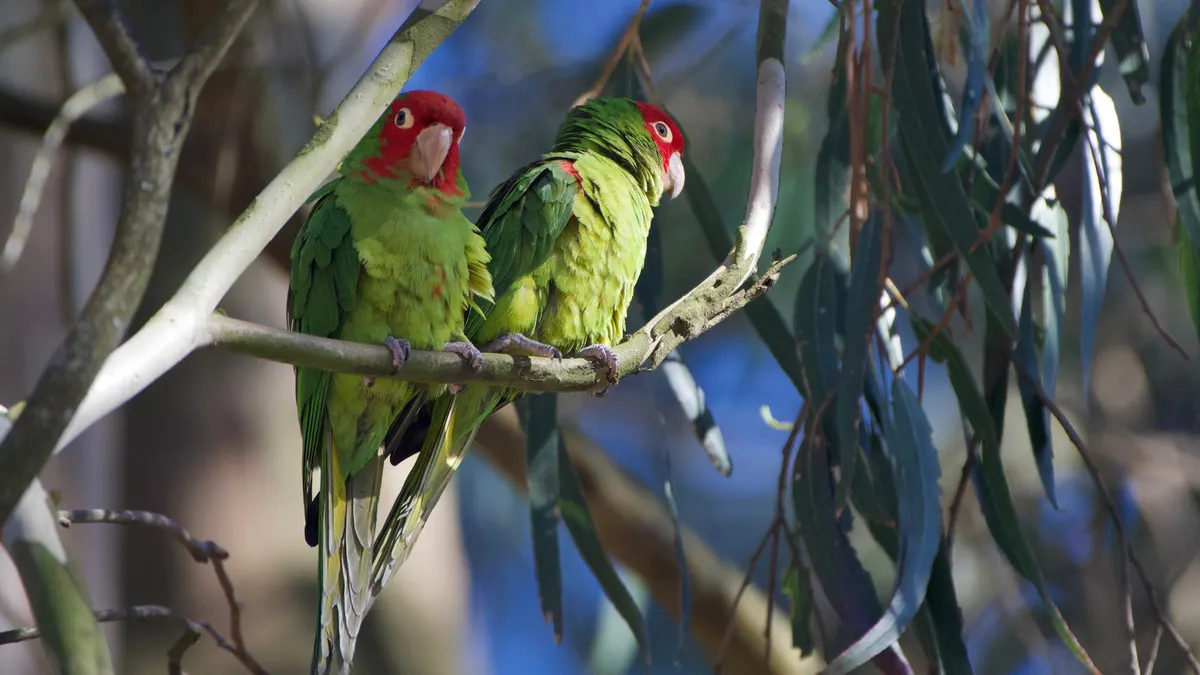
Cover photo: aratinga de guayaquil, conure à tête rouge, periquito-de-cabeça-vermelha, red-masked parakeet by Dario Taraborelli, CC0 1.0, via inaturalist. Cropped.
Related guides
What Do Cockatiels Eat? A Vet-Based Daily Diet for Cockatiels
The daily cockatiel diet from VCA and Merck: pellet, produce and seed shares, vitamin A foods, a cockatiel vitamin A study, hen calcium and toxic foods.
Best Finch and Canary Food (2026): Pellets, Seed and Egg Food Compared
Six finch and canary foods compared on the makers' own labels against VCA's and Merck's figures, with daily servings that differ by three times.
Best Lovebird Food (2026): Five Pellets and Blends Held to Vet Figures
Five lovebird foods compared on the makers' own labels against VCA's and Merck's diet figures, with the calcium levels only one maker publishes.