
What Is Poisonous to Birds? 56 Foods, Fumes, Metals and Plants
Affiliate disclosure: product links on this page go to Amazon, or to the maker's own store for brands that sell only direct. As an Amazon Associate we earn from qualifying purchases, at no extra cost to you; a link to a maker's store earns us nothing. No retailer or brand sees our picks before they are published or has any say in them. How we choose.
Seven hazards in a bird's home can kill quickly: avocado, fumes from overheated nonstick (PTFE) coatings, carbon monoxide, lead, rhubarb leaves, eaten tobacco and mouse or rat poison. The database below lists 56 hazards in all, from chocolate and moldy food to zinc in galvanized wire, scented candles and 31 plants, each with where birds meet it, the signs to watch for and the veterinary sources it comes from: the Merck Veterinary Manual, Pet Poison Helpline, VCA Animal Hospitals and the University of Illinois College of Veterinary Medicine. Search a name, or filter by foods, fumes, metals, household products or plants.
What is poisonous to pet birds: foods, fumes, metals and plants
56
Hazards listed
7
Can kill quickly
Avocado, nonstick fumes, lead and more
17
Vet emergency
31
Plants
11 reported harmful in birds
Showing 56 of 56 hazards
- AvocadoCan kill quicklyFood
Persin, in every part of the avocado: skin, flesh, pit, leaves and bark
- Where birds meet it
- Guacamole, avocado toast, leftovers; avocado trees in yards
- Signs
- Agitation, feather pulling, lethargy, refusing food, labored breathing, fluid around the heart, sudden death
Pet Poison Helpline gives a lethal dose of 3.5 g for a 35 g budgerigar and 20 to 30 g for a cockatiel. There is no antidote.
Source: Top 5 Toxins in Companion Birds (Pet Poison Helpline); Keep Teflon, Avocado, Lead, and Zinc Away From Pet Birds (University of Illinois College of Veterinary Medicine, 2018); Bad for Birds: Prevent Poisoning in Avian Pets (University of Illinois College of Veterinary Medicine, April 2026); Plants Toxic for Birds (VCA Animal Hospitals)
- ChocolateVet emergencyFood
Stimulants
- Where birds meet it
- Candy, baked goods, cocoa
- Signs
- Hyperexcitability, tremors, seizures
Treatment works best quickly; vets may give activated charcoal.
- CaffeineVet emergencyFood
Caffeine, a stimulant
- Where birds meet it
- Coffee, tea, energy drinks, soda
- Signs
- Hyperexcitability, tremors, seizures
- OnionVet emergencyFood
Compounds that damage red blood cells
- Where birds meet it
- Raw, cooked or powdered onion in table food
- Signs
- Lethargy, pale membranes in the mouth or around the eyes, difficulty breathing (anemia); kidney damage
Severe cases may need a blood transfusion.
Source: Bad for Birds: Prevent Poisoning in Avian Pets (University of Illinois College of Veterinary Medicine, April 2026); Plants Toxic for Birds (VCA Animal Hospitals)
- Garlic, leeks and chivesVet emergencyFood
Onion-family compounds that damage red blood cells
- Where birds meet it
- Table food, seasonings, garlic powder
- Signs
- Same as onion: anemia, lethargy, pale membranes, breathing difficulty
VCA lists garlic among plants reported harmful in birds.
Source: Bad for Birds: Prevent Poisoning in Avian Pets (University of Illinois College of Veterinary Medicine, April 2026); Plants Toxic for Birds (VCA Animal Hospitals)
- Rhubarb leavesCan kill quicklyFood
Compounds that lower blood calcium and harm the kidneys
- Where birds meet it
- Garden rhubarb
- Signs
- Digestive upset, low blood calcium, kidney damage
VCA warns that even small amounts can cause death.
- Fruit seeds and pitsVet emergencyFood
Cyanide-forming compounds (cyanogenic glycosides) inside some seeds and pits
- Where birds meet it
- Fruit fed whole; birds crack seeds and pits open
- Signs
- Within 1 to 2 hours: abnormal heart rhythm, vomiting or regurgitation, diarrhea, weakness, wobbling, seizures, changed breathing
Fruit is a good treat; remove the pits and seeds first.
Source: What's Poisonous to Birds and Pocket Pets? (Pet Poison Helpline)
- Moldy foodVet emergencyFood
Mycotoxins from mold
- Where birds meet it
- Old grains, peanuts, beans, meat and cheese
- Signs
- Within 2 to 3 hours: seizures, depression, wobbling, vomiting or regurgitation, diarrhea, not eating, overheating, heart effects
Signs can last for days. If it is too old for you to eat, throw it out.
Source: What's Poisonous to Birds and Pocket Pets? (Pet Poison Helpline)
- Tobacco (eaten)Can kill quicklyFood
Nicotine
- Where birds meet it
- Cigarettes, cigars, cigarette butts left within reach
- Signs
- Hyperexcitability, agitation, vomiting or regurgitation, racing heart, tremors, seizures, death
A tiny amount can cause serious poisoning in a bird.
Source: What's Poisonous to Birds and Pocket Pets? (Pet Poison Helpline); Toxicoses of Pet Birds (Merck Veterinary Manual, reviewed Sept 2021, updated May 2026)
- Nonstick coatings (PTFE, Teflon)Can kill quicklyFumesSources differ
Particles and acid gases released when PTFE is overheated (above 280 °C / 536 °F)
- Where birds meet it
- Nonstick pans and drip pans, waffle irons, clothes irons, ironing board covers, some self-cleaning ovens, heat lamps, heating elements, hair dryers, stain-guard treatments
- Signs
- Often sudden death; otherwise labored or open-beaked breathing, wheezing, tail bobbing, wobbling, weakness, seizures
The usual cause is a pan boiling dry or heated empty. Small birds can die from minimal exposure. Keep birds out of the kitchen. Sources differ on normal cooking: Pet Poison Helpline says poisoning is not expected during routine cooking, while VCA reports cases at recommended temperatures and Illinois (2026) says the gas forms even at normal temperatures.
Source: Toxicoses of Pet Birds (Merck Veterinary Manual, reviewed Sept 2021, updated May 2026); Top 5 Toxins in Companion Birds (Pet Poison Helpline); Household Hazards and Dangers to Birds (VCA Animal Hospitals); Keep Teflon, Avocado, Lead, and Zinc Away From Pet Birds (University of Illinois College of Veterinary Medicine, 2018); Bad for Birds: Prevent Poisoning in Avian Pets (University of Illinois College of Veterinary Medicine, April 2026)
- Carbon monoxideCan kill quicklyFumes
Carbon monoxide gas
- Where birds meet it
- Fuel-burning appliances and fireplaces
- Signs
- Sudden death, labored breathing
Birds were used in coal mines to warn of carbon monoxide for this reason.
Source: Top 5 Toxins in Companion Birds (Pet Poison Helpline); Household Hazards and Dangers to Birds (VCA Animal Hospitals)
- Tobacco smoke and vapingVet emergencyFumes
Smoke and residue
- Where birds meet it
- Smoking or vaping indoors; nicotine on hands, hair and clothes
- Signs
- Coughing, sneezing, eye and nasal discharge, labored breathing, skin problems on the face and feet, feather destruction
Smoke outside and wash hands before handling a bird.
Source: Toxicoses of Pet Birds (Merck Veterinary Manual, reviewed Sept 2021, updated May 2026); Household Hazards and Dangers to Birds (VCA Animal Hospitals); Bad for Birds: Prevent Poisoning in Avian Pets (University of Illinois College of Veterinary Medicine, April 2026)
- Scented candles and air freshenersVet emergencyFumes
Fragrance and combustion fumes
- Where birds meet it
- Scented and votive candles, plug-in and spray air fresheners, deodorizers, carpet fresheners
- Signs
- Breathing difficulty; possible death
Source: What's Poisonous to Birds and Pocket Pets? (Pet Poison Helpline); Top 5 Toxins in Companion Birds (Pet Poison Helpline); Toxicoses of Pet Birds (Merck Veterinary Manual, reviewed Sept 2021, updated May 2026); Household Hazards and Dangers to Birds (VCA Animal Hospitals)
- Aerosol sprays and cleaning fumesVet emergencyFumes
Volatile chemicals
- Where birds meet it
- Spray cleaners, oven cleaner, hair spray, perfume, nail polish
- Signs
- Breathing difficulty, eye and nose irritation, possible death
Move the bird to a closed, ventilated room before using strong products.
Source: What's Poisonous to Birds and Pocket Pets? (Pet Poison Helpline); Top 5 Toxins in Companion Birds (Pet Poison Helpline); Toxicoses of Pet Birds (Merck Veterinary Manual, reviewed Sept 2021, updated May 2026); Household Hazards and Dangers to Birds (VCA Animal Hospitals)
- Essential oil diffusersHarmfulFumes
Aerosolized oils
- Where birds meet it
- Diffusers and vaporizers
- Signs
- Respiratory irritation
VCA says diffusers and vaporizers should not be used around birds; oils on feathers are also harmful.
Source: Household Hazards and Dangers to Birds (VCA Animal Hospitals)
- Paint, varnish and glue fumesHarmfulFumes
Volatile organic compounds
- Where birds meet it
- Painting, refinishing, new carpet and furniture, which can off-gas for months
- Signs
- Respiratory irritation
Use low-VOC paint, ventilate, or board the bird during renovations.
Source: Top 5 Toxins in Companion Birds (Pet Poison Helpline); Household Hazards and Dangers to Birds (VCA Animal Hospitals)
- Burned or melted plasticHarmfulFumes
Combustion fumes
- Where birds meet it
- Plastic melted or burned in a microwave or oven
- Signs
- Respiratory irritation
Source: Toxicoses of Pet Birds (Merck Veterinary Manual, reviewed Sept 2021, updated May 2026)
- New heating ductsHarmfulFumes
Fumes from first use
- Where birds meet it
- A new furnace or duct system running for the first time
- Signs
- Respiratory irritation
Source: Toxicoses of Pet Birds (Merck Veterinary Manual, reviewed Sept 2021, updated May 2026)
- MothballsHarmfulFumes
Mothball fumes
- Where birds meet it
- Closets and storage near the bird room
- Signs
- Breathing difficulty
Source: Top 5 Toxins in Companion Birds (Pet Poison Helpline); Household Hazards and Dangers to Birds (VCA Animal Hospitals)
- ZincVet emergencyMetal
Zinc, which birds tolerate far less than people
- Where birds meet it
- Galvanized wire cages, mesh, staples, nails, chains, bells, keys, some toys, zipper pulls, pennies minted after 1982, zinc oxide, zinc shampoos, human vitamins, linoleum, some rubber
- Signs
- Not eating, digestive upset, weakness, regurgitation, more drinking and urination
Pet Poison Helpline calls zinc the most common metal poisoning in caged birds. Merck treats a blood zinc above 2 ppm as diagnostic.
Source: Top 5 Toxins in Companion Birds (Pet Poison Helpline); Toxicoses of Pet Birds (Merck Veterinary Manual, reviewed Sept 2021, updated May 2026); Keep Teflon, Avocado, Lead, and Zinc Away From Pet Birds (University of Illinois College of Veterinary Medicine, 2018); Bad for Birds: Prevent Poisoning in Avian Pets (University of Illinois College of Veterinary Medicine, April 2026)
- LeadCan kill quicklyMetal
Lead, released slowly from swallowed pieces
- Where birds meet it
- Paint from before 1978, curtain weights, fishing sinkers, solder, stained glass and Tiffany lamps, foil from wine bottles, costume jewelry, old mirror backings, blinds, bells with lead clappers, some imported toys, lead shot
- Signs
- Weakness, wobbling, seizures, blindness, regurgitation, diarrhea, weight loss, more drinking and urination; some species pass red urine
Merck treats a blood lead above 50 mcg/dL as diagnostic. Modern pencils and newspaper ink contain no lead (VCA). If a bird has lead poisoning, test the children in the home too.
Source: Toxicoses of Pet Birds (Merck Veterinary Manual, reviewed Sept 2021, updated May 2026); Top 5 Toxins in Companion Birds (Pet Poison Helpline); Lead Poisoning in Birds (VCA Canada); Household Hazards and Dangers to Birds (VCA Animal Hospitals); Keep Teflon, Avocado, Lead, and Zinc Away From Pet Birds (University of Illinois College of Veterinary Medicine, 2018)
- Mouse and rat poisonCan kill quicklyHousehold
Rodenticides (several active ingredients)
- Where birds meet it
- Bait placed on high cabinets or under furniture; colorful pellets resemble bird food
- Signs
- Varies by product; treat any exposure as life-threatening
Avoid rodenticides in a home with free-flying birds.
Source: What's Poisonous to Birds and Pocket Pets? (Pet Poison Helpline)
- Human medicationsVet emergencyHousehold
Drugs of all kinds
- Where birds meet it
- Pill bottles and blister packs birds can chew open
- Signs
- Varies by drug
Keep medications locked away.
Source: Household Hazards and Dangers to Birds (VCA Animal Hospitals)
- Insecticides and pesticidesVet emergencyHousehold
Pesticide active ingredients
- Where birds meet it
- Insecticides, pesticides and garden chemicals
- Signs
- Varies by product
Lock them away; move the bird out before any spraying.
Source: Household Hazards and Dangers to Birds (VCA Animal Hospitals)
- Oil and grease on feathersHarmfulHousehold
Oils that mat feathers and destroy their insulation
- Where birds meet it
- Petroleum jelly, mineral oil, oil-based ointments, cooking oil, essential oils, vitamin E oil, cod liver oil, motor oil
- Signs
- Matted feathers, chilling
Never put oil-based products on a bird.
Source: Household Hazards and Dangers to Birds (VCA Animal Hospitals)
- OleanderVet emergencyPlant
Heart-affecting plant toxins
- Where birds meet it
- Gardens, landscaping, cut flowers
- Signs
- Abnormal heart rhythm and heart rate
Heart rhythm and rate changes reported in birds.
- FoxgloveDigitalisVet emergencyPlant
Heart-affecting plant toxins
- Where birds meet it
- Gardens, landscaping, cut flowers
- Signs
- Abnormal heart rhythm and heart rate
Heart rhythm and rate changes reported in birds.
- Lily of the valleyVet emergencyPlant
Heart-affecting plant toxins
- Where birds meet it
- Gardens, landscaping, cut flowers
- Signs
- Abnormal heart rhythm and heart rate
Heart rhythm and rate changes reported in birds.
- RhododendronVet emergencyPlant
Heart-affecting plant toxins
- Where birds meet it
- Gardens, landscaping, cut flowers
- Signs
- Abnormal heart rhythm and heart rate
Heart rhythm and rate changes reported in birds.
- YewJapanese, English and Western yewVet emergencyPlant
Heart-affecting plant toxins
- Where birds meet it
- Gardens, landscaping, cut flowers
- Signs
- Abnormal heart rhythm and heart rate
Japanese yew is linked to heart rhythm changes in birds; English and Western yew are reported harmful.
- PoinsettiaHarmfulPlant
Plant toxins
- Where birds meet it
- Houseplants, gardens and yards
- Signs
- Not detailed by the source
VCA marks it as specifically reported harmful in birds.
- Black locustHarmfulPlant
Plant toxins
- Where birds meet it
- Houseplants, gardens and yards
- Signs
- Not detailed by the source
VCA marks it as specifically reported harmful in birds.
- ClematisHarmfulPlant
Plant toxins
- Where birds meet it
- Houseplants, gardens and yards
- Signs
- Not detailed by the source
VCA marks it as specifically reported harmful in birds.
- Virginia creeperHarmfulPlant
Plant toxins
- Where birds meet it
- Houseplants, gardens and yards
- Signs
- Not detailed by the source
VCA marks it as specifically reported harmful in birds.
- DieffenbachiaDumb caneHarmfulPlant
Irritant crystals in the leaves and stems
- Where birds meet it
- Common houseplant
- Signs
- Digestive upset, mouth pain, sometimes difficulty breathing
- PhilodendronHarmfulPlant
Irritant crystals in the leaves and stems
- Where birds meet it
- Common houseplant
- Signs
- Digestive upset, mouth pain, sometimes difficulty breathing
- PothosDevil's ivyListed as poisonousPlant
Plant toxins
- Where birds meet it
- Houseplants, bouquets and gardens
- Signs
- Not reported specifically in birds
On VCA's list of plants that may be poisonous to birds; VCA notes that for many plants the risk to birds is inferred from other species.
- Peace lilyListed as poisonousPlant
Plant toxins
- Where birds meet it
- Houseplants, bouquets and gardens
- Signs
- Not reported specifically in birds
On VCA's list of plants that may be poisonous to birds; VCA notes that for many plants the risk to birds is inferred from other species.
- Sago palmCycadsListed as poisonousPlant
Plant toxins
- Where birds meet it
- Houseplants, bouquets and gardens
- Signs
- Not reported specifically in birds
On VCA's list of plants that may be poisonous to birds; VCA notes that for many plants the risk to birds is inferred from other species.
- Aloe veraListed as poisonousPlant
Plant toxins
- Where birds meet it
- Houseplants, bouquets and gardens
- Signs
- Not reported specifically in birds
On VCA's list of plants that may be poisonous to birds; VCA notes that for many plants the risk to birds is inferred from other species.
- English ivyListed as poisonousPlant
Plant toxins
- Where birds meet it
- Houseplants, bouquets and gardens
- Signs
- Not reported specifically in birds
On VCA's list of plants that may be poisonous to birds; VCA notes that for many plants the risk to birds is inferred from other species.
- LiliesEaster, tiger, stargazer and day liliesListed as poisonousPlant
Plant toxins
- Where birds meet it
- Houseplants, bouquets and gardens
- Signs
- Not reported specifically in birds
On VCA's list of plants that may be poisonous to birds; VCA notes that for many plants the risk to birds is inferred from other species.
- DaffodilNarcissusListed as poisonousPlant
Plant toxins
- Where birds meet it
- Houseplants, bouquets and gardens
- Signs
- Not reported specifically in birds
On VCA's list of plants that may be poisonous to birds; VCA notes that for many plants the risk to birds is inferred from other species.
- TulipListed as poisonousPlant
Plant toxins
- Where birds meet it
- Houseplants, bouquets and gardens
- Signs
- Not reported specifically in birds
On VCA's list of plants that may be poisonous to birds; VCA notes that for many plants the risk to birds is inferred from other species.
- HyacinthListed as poisonousPlant
Plant toxins
- Where birds meet it
- Houseplants, bouquets and gardens
- Signs
- Not reported specifically in birds
On VCA's list of plants that may be poisonous to birds; VCA notes that for many plants the risk to birds is inferred from other species.
- AzaleaListed as poisonousPlant
Plant toxins
- Where birds meet it
- Houseplants, bouquets and gardens
- Signs
- Not reported specifically in birds
On VCA's list of plants that may be poisonous to birds; VCA notes that for many plants the risk to birds is inferred from other species.
- HydrangeaListed as poisonousPlant
Plant toxins
- Where birds meet it
- Houseplants, bouquets and gardens
- Signs
- Not reported specifically in birds
On VCA's list of plants that may be poisonous to birds; VCA notes that for many plants the risk to birds is inferred from other species.
- ScheffleraUmbrella treeListed as poisonousPlant
Plant toxins
- Where birds meet it
- Houseplants, bouquets and gardens
- Signs
- Not reported specifically in birds
On VCA's list of plants that may be poisonous to birds; VCA notes that for many plants the risk to birds is inferred from other species.
- KalanchoeListed as poisonousPlant
Plant toxins
- Where birds meet it
- Houseplants, bouquets and gardens
- Signs
- Not reported specifically in birds
On VCA's list of plants that may be poisonous to birds; VCA notes that for many plants the risk to birds is inferred from other species.
- Tomato plant (green parts)Listed as poisonousPlant
Plant toxins
- Where birds meet it
- Houseplants, bouquets and gardens
- Signs
- Not reported specifically in birds
On VCA's list of plants that may be poisonous to birds; VCA notes that for many plants the risk to birds is inferred from other species.
- Castor beanListed as poisonousPlant
Plant toxins
- Where birds meet it
- Houseplants, bouquets and gardens
- Signs
- Not reported specifically in birds
On VCA's list of plants that may be poisonous to birds; VCA notes that for many plants the risk to birds is inferred from other species.
- MistletoeListed as poisonousPlant
Plant toxins
- Where birds meet it
- Houseplants, bouquets and gardens
- Signs
- Not reported specifically in birds
On VCA's list of plants that may be poisonous to birds; VCA notes that for many plants the risk to birds is inferred from other species.
- HollyListed as poisonousPlant
Plant toxins
- Where birds meet it
- Houseplants, bouquets and gardens
- Signs
- Not reported specifically in birds
On VCA's list of plants that may be poisonous to birds; VCA notes that for many plants the risk to birds is inferred from other species.
- CaladiumListed as poisonousPlant
Plant toxins
- Where birds meet it
- Houseplants, bouquets and gardens
- Signs
- Not reported specifically in birds
On VCA's list of plants that may be poisonous to birds; VCA notes that for many plants the risk to birds is inferred from other species.
- DracaenaCorn plantListed as poisonousPlant
Plant toxins
- Where birds meet it
- Houseplants, bouquets and gardens
- Signs
- Not reported specifically in birds
On VCA's list of plants that may be poisonous to birds; VCA notes that for many plants the risk to birds is inferred from other species.
- MarijuanaListed as poisonousPlant
Plant toxins
- Where birds meet it
- Houseplants, bouquets and gardens
- Signs
- Not reported specifically in birds
On VCA's list of plants that may be poisonous to birds; VCA notes that for many plants the risk to birds is inferred from other species.
The seven that can kill quickly
| Hazard | Why | Source |
|---|---|---|
| Avocado | Persin, in every part of the fruit and tree; 3.5 g can kill a 35 g budgerigar | Pet Poison Helpline; Illinois |
| Overheated nonstick (PTFE) | Toxic particles and gases above 280 °C (536 °F); often sudden death | Merck; Pet Poison Helpline; VCA |
| Carbon monoxide | Birds take in more of an inhaled gas with each breath than mammals | Pet Poison Helpline; VCA |
| Lead | Old paint, curtain weights, solder, stained glass, some imported toys | Merck; VCA |
| Rhubarb leaves | Low blood calcium and kidney damage; small amounts can kill | VCA |
| Tobacco, eaten | Nicotine; a tiny amount causes serious poisoning | Pet Poison Helpline; Merck |
| Mouse and rat poison | Colorful pellets look like bird food | Pet Poison Helpline |
Why birds are so sensitive
Thanks to their air sacs, birds move more oxygen into the blood with each breath than mammals do, and more of anything else in the air, which makes fumes especially dangerous; Pet Poison Helpline points out that this is why canaries were taken into coal mines. Birds are small, so a dose that would not trouble a dog can poison a budgerigar, and they explore everything with their beaks, including metal, paint and plants.
Nonstick pans: what the sources agree on, and where they differ
Every source agrees that polytetrafluoroethylene (PTFE), the coating sold as Teflon, releases gases that can kill a bird when it is overheated, and that the classic case is a pan that boils dry or is heated empty. PTFE is also on drip pans, irons and ironing board covers, some self-cleaning ovens, heat lamps, heating elements and hair dryers. They differ on ordinary cooking. Pet Poison Helpline says poisoning is not expected during routine cooking; VCA says cases have been reported at recommended temperatures, and the University of Illinois's 2026 column says the gas is produced at normal temperatures. The practical answer is the same either way: keep the bird out of the kitchen, which our cage placement guide ranks as the one room never to use. The University of Illinois notes that some bird households replace PTFE pans with ceramic-coated ones.
Metal in cages and toys
Zinc is the most common metal poisoning in caged birds, according to Pet Poison Helpline. It comes from galvanized wire, mesh, staples, chains, bells, keys, some toys, zipper pulls and pennies minted after 1982, and birds are far more sensitive to it than people. Lead is rarer than it was but more dangerous, and it is still found in old paint, curtain and fishing weights, solder, stained glass and some imported toys. This is why cage material matters: our powder-coated versus stainless steel comparison and cage safety checklist cover what to look for.
Foods to keep off the plate
Beyond avocado, the University of Illinois names chocolate and caffeine (stimulants that cause tremors and seizures) and onions with the rest of their family, including garlic, leeks and chives, which damage red blood cells. Pet Poison Helpline adds two easy mistakes: moldy food, whose mycotoxins can cause seizures within hours, and fruit seeds and pits, which birds crack open to reach the cyanide-forming compounds inside. Fruit is a good treat once the pits and seeds are out.
Plants: reported in birds versus listed
VCA's list of plants that may be poisonous to birds is long, but VCA is clear that studies in birds are limited and that for many plants the risk is inferred from other species. The database separates the two. Eleven plants are reported harmful in birds or have described effects: oleander, foxglove, lily of the valley, rhododendron and yew can disturb the heart's rhythm; dieffenbachia and philodendron cause mouth pain and digestive upset; poinsettia, black locust, clematis and Virginia creeper are marked as harmful to birds. Twenty more common plants, from pothos and peace lily to lilies, sago palm and tulips, are listed as possibly poisonous without bird-specific reports. Either way, keep houseplants out of reach unless you know they are safe.
If your bird is exposed
Call your avian veterinarian or an animal poison line straight away: Pet Poison Helpline at 855-764-7661, which charges a per-incident fee, or ASPCA Poison Control at 888-426-4435. Have the product or plant name ready. With fumes, get the bird into fresh air, but do not wait for signs; with PTFE the first sign is often death. There is no antidote for avocado or PTFE poisoning, so vets give supportive care, which is why prevention matters more here than in almost any other part of bird keeping.
How we built this
Each entry comes from at least one of eight veterinary sources, listed on its card, read on October 12, 2026: the Merck Veterinary Manual's Toxicoses of Pet Birds, two Pet Poison Helpline articles, three VCA Animal Hospitals articles and two University of Illinois College of Veterinary Medicine columns. Where sources disagree, the card says so. Severity is our grouping of what the sources describe, not a dose-response rating, and a hazard missing from the list is not proof that something is safe.
Frequently asked questions
Is Teflon really dangerous for birds?
Yes. Overheated PTFE (Teflon) releases gases that often kill birds suddenly. Sources differ on whether normal cooking is a risk, so keep birds out of the kitchen and never let a nonstick pan boil dry or heat empty.
Can birds eat avocado?
No. Every part of the avocado contains persin, which can cause breathing difficulty, heart damage and sudden death in birds. Pet Poison Helpline puts the lethal dose for a budgerigar at 3.5 grams, and there is no antidote.
What metals are toxic to birds?
Zinc and lead. Zinc, from galvanized wire, chains, bells, some toys and post-1982 pennies, is the most common metal poisoning in caged birds. Lead comes from old paint, weights, solder, stained glass and some imported toys.
Are scented candles safe around birds?
No. Pet Poison Helpline, VCA and the Merck Veterinary Manual all warn that scented and votive candles, air fresheners and aerosol sprays can cause breathing problems or death in birds. Ventilate well or keep the bird in another room.
Which houseplants are toxic to birds?
Dieffenbachia and philodendron cause mouth pain and digestive upset, and oleander, foxglove, lily of the valley, rhododendron and yew can affect the heart. Pothos, peace lily, lilies and sago palm are on VCA's list of plants that may be poisonous to birds.
What should I do if my bird ate something toxic?
Call your avian vet or an animal poison line, such as Pet Poison Helpline (855-764-7661, fee applies) or ASPCA Poison Control (888-426-4435), and have the product or plant name ready. Do not wait for signs to appear.
Sources
- Toxicoses of Pet Birds, Merck Veterinary Manual
- Top 5 Toxins in Companion Birds, Pet Poison Helpline
- What's Poisonous to Birds and Pocket Pets?, Pet Poison Helpline
- Household Hazards and Dangers to Birds, VCA Animal Hospitals
- Plants Toxic for Birds, VCA Animal Hospitals
- Lead Poisoning in Birds, VCA Canada
- Keep Teflon, Avocado, Lead, and Zinc Away From Pet Birds, University of Illinois College of Veterinary Medicine
- Bad for Birds: Prevent Poisoning in Avian Pets, University of Illinois College of Veterinary Medicine
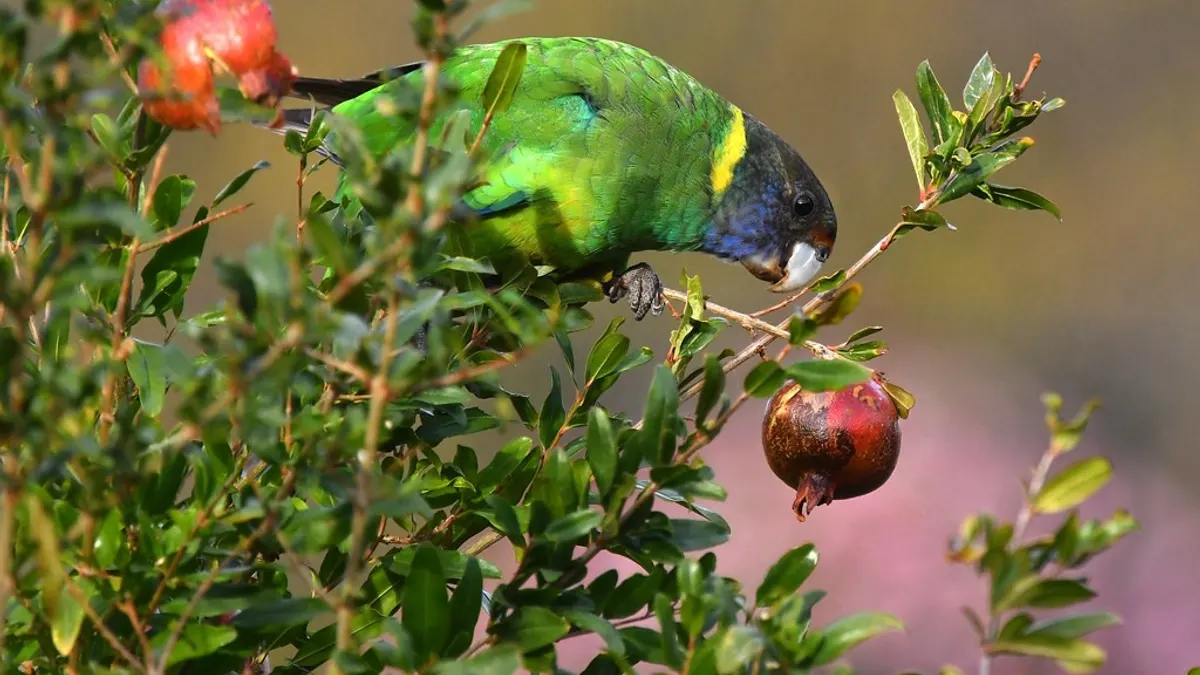
Cover photo: 28 Parrot checking out the Pomegranates by jeans_Photos, CC BY 2.0, via Flickr. Cropped.
Related guides
Bird Cage Bar Spacing Guide: The Right Gap for Every Species, and Why
The Merck bar-spacing figures by species, the finger test, why gauge matters as much as gap for big birds, and cages that match each figure.
Bird Cage Buying Guide: Size, Spacing, Material, Doors, Tray and Price, in Order
The checks in order before buying any cage: species minimum, spacing and gauge, material, shape, doors, tray, stand, the listing's traps and the price by size class.
Bird Cage Cleaning and Disinfecting Guide: Daily, Weekly and the Full Sequence
The daily routine from VCA and PetMD, the CDFA's six-step deep clean with label-only disinfecting, and the products and fumes to keep out of a bird room.