
Bird Cage Safety Checklist: The Cage, the Hardware and the Room, from the Vets
Affiliate disclosure: product links on this page go to Amazon, or to the maker's own store for brands that sell only direct. As an Amazon Associate we earn from qualifying purchases, at no extra cost to you; a link to a maker's store earns us nothing. No retailer or brand sees our picks before they are published or has any say in them. How we choose.
A cage can be the right size and still hurt the bird: bars it can push its head through, a chipped coating it eats, a galvanized clip, a frying pan in the next room. This checklist is the hazards the avian sources name, grouped as the cage, the hardware, what goes inside and the room, each with the source so you can read it yourself. VCA Animal Hospitals' pages on housing, household hazards and non-stick cookware, the Merck Veterinary Manual's size and spacing table and owner pages, Howard's 1992 galvanized-wire study in the Journal of the American Veterinary Medical Association, the Niles Animal Hospital's lead and zinc sheet and RSPCA Australia's housing advice are the sources. Nothing here is medical advice; a bird that has chewed metal, breathed fumes or is sitting fluffed on the floor needs an avian veterinarian, and VCA's non-stick page gives the Pet Poison Helpline as 1-800-213-6680. For foods, fumes, metals and plants in detail, see the bird toxins database.
The cage
| Check | Why | Source |
|---|---|---|
| Bar spacing matches the bird: 1/2 in budgies, lovebirds, parrotlets, cockatiels; 3/4 in conures and similar; 1 in greys and Amazons; 1 1/2 in macaws | A head between the bars is the cage injury | Merck Veterinary Manual table |
| Bars thick enough that the bird cannot bend them | A bent bar is a wider gap | PetMD (Dr. Latas); Prevue publishes gauge |
| No converging bars, domed tops or decorative scrollwork a toe or head can wedge in | Entrapment | PetMD (Dr. Latas) |
| Rectangular, wider than tall | Round cages give no corner and little flight | VCA; Merck owner page |
| At least the Merck minimum; 1.5 times the wingspan in every direction | Room to stretch and move | Merck; MSPCA/AAV guidance |
| No chipped or flaking coating; no rust | Birds swallow chips; older coatings can contain zinc | VCA Housing Small Birds |
| Not galvanized, or wire-brushed and inspected if it is | Galvanized coating toxic to cockatiels at 2 mg a week | Howard 1992 (JAVMA); Niles Animal Hospital |
| No white rust (zinc corrosion) anywhere | Toxic | Niles Animal Hospital |
| Wire floor covered, or a grille the feet can stand on | Foot injury | MSPCA/AAV; VCA |
| Not wood, wicker or bamboo for a parrot | Chewed through; cannot be disinfected | VCA |
| Doors that latch against a beak; locks on a large parrot's cage | Escapes into a room with the hazards below | Prevue (bird-proof locks on the Imperial); our inference from the hazards list |
The hardware
| Check | Why | Source |
|---|---|---|
| No galvanized clips, quick links, chains or dishes | Zinc; especially dishes holding acidic food | Niles Animal Hospital |
| Stainless dishes for large birds; non-toxic, sturdy, washed daily for all | Chewed plastic; bacteria | VCA |
| Water shallow enough that a small bird cannot get stuck | Drowning and chilling | VCA |
| No lead: curtain weights, fishing weights, stained-glass solder, pre-1978 paint within reach | Lead poisoning | VCA Household Hazards |
| Imported toys and cage parts checked for lead and zinc | Some contain both | VCA Household Hazards |
| Natural wood perches of varied diameter; no sandpaper covers; natural cotton or hemp rope only, watched for strands | Foot sores; toe entanglement | VCA |
| Perch woods from the safe list; none from the avoid list (apricot, cherry, nectarine, peach, prune, plum, oak, laurel, pitch pine, yew) | Toxic woods | VCA |
What goes inside
Toys and swings come out of a travel cage before a car trip (VCA transport page). Rope and fabric toys are checked for loose strands daily (VCA). Mirrors and bells are a matter of opinion among owners and we found no veterinary source for or against them; a bell with a clapper a bird can remove is a small metal part, and small metal parts are the zinc and lead question above. Paper on the tray, changed daily, so droppings can be seen (VCA). No grit for parrots (PetMD). The perch guide and dish guide have the picks that pass.
The room
| Check | Why | Source |
|---|---|---|
| No bird in the kitchen, ever, and no non-stick cookware, drip pans, irons, ironing-board covers, waffle irons, heat lamps or space heaters with PTFE coatings heated anywhere the fumes reach | PTFE fumes kill birds, sometimes at ordinary cooking temperatures; sudden death; budgies most sensitive; VCA says the only reliable prevention is avoiding PTFE around birds | VCA, Teflon Toxicity in Birds |
| Not the laundry room | Same fumes from heating elements and irons | VCA, Teflon Toxicity |
| No smoke, aerosols, scented candles, paint or cleaning fumes in the room | Airway irritation and poisoning | VCA Household Hazards |
| Ceiling fans off whenever the bird is out | Never let a bird fly with a fan running | VCA Household Hazards |
| Toilets closed, sinks and tubs empty, pots covered | Drowning | VCA Household Hazards |
| Windows and mirrors marked or covered when the bird is out | Collisions | VCA Household Hazards |
| Cats, dogs, ferrets, snakes and lizards never alone with the bird | Predation; a cat scratch is a medical emergency | VCA Household Hazards |
| Out of the sight and sound of predators, indoors and out | Stress | RSPCA Australia |
| Away from windows, air conditioners and drafts; comfortable room temperature | Chilling; overheating in sun | Merck owner page; PetMD |
| Not under a stucco or popcorn ceiling the bird can reach | Ingested ceiling material | VCA Household Hazards |
| Houseplants checked against a toxic list; none within reach | Poisoning | VCA Household Hazards |
| No open doors to the outside when the bird is out | Escape | VCA Household Hazards |
The night and the car
Ten to fourteen hours of dark, quiet sleep (PetMD), in a room without late television; whether to cover is the one point where Merck's owner page (most birds should not be covered) and PetMD (cover or darken the room) differ, and the placement guide gives both. In the car: never loose, belted in, toys out, no water dish, never left alone in a parked car, no sedatives (VCA transport page), as the carrier guide sets out.
What zinc poisoning looks like, so you call in time
The Niles Animal Hospital sheet describes heavy-metal poisoning in birds as vague and variable: lethargy, weakness, depression, regurgitation, loss of appetite, increased thirst and urination, greenish or discoloured droppings, weight loss, and in lead cases neurological signs; it says diagnosis is by blood level and history and treatment is chelation (calcium EDTA) by a veterinarian. Howard's cockatiels on the high dose died within two weeks. The practical rule is the one at the top: a bird that has been chewing a galvanized or unknown metal and is off colour goes to an avian vet that day, with the metal.
The checklist in one place
Spacing by the Merck table. Gauge the bird cannot bend. No converging bars. Rectangular. No chips, rust or white rust. Not galvanized unless brushed and inspected. Floor covered. Metal, not wood. Latches. Stainless or stated non-toxic hardware. Stainless dishes for big birds. Shallow water. No lead within reach. Natural perches, no sandpaper, natural rope. Safe woods only. Paper changed daily. Not the kitchen, not the laundry. No PTFE heated in the house. No smoke, aerosols or fumes. Fans off. Water covered. Windows marked. Other pets never alone with the bird. Away from drafts and sun. Dark, quiet nights. Belted in the car. The setup guide walks the cage itself; the buying guide runs the checks before the cage is bought.
Frequently asked questions
What is the most dangerous thing in a house for a pet bird?
VCA's non-stick cookware page: PTFE fumes from heated non-stick pans, drip pans, irons and similar items can kill birds quickly, sometimes at ordinary cooking temperatures, and the only reliable prevention is keeping PTFE out of a bird's house. Never house a bird in the kitchen.
What bar spacing is safe for my bird?
The Merck Veterinary Manual's table: 1/2 inch for budgies, lovebirds, parrotlets and cockatiels; 3/4 inch for conures and similar; 1 inch for African greys and Amazons; 1 1/2 inches for macaws. The bar spacing guide has the full table beside VCA's.
Is galvanized wire dangerous to birds?
Howard's 1992 JAVMA study found galvanized coating toxic to cockatiels at 2 mg a week and lethal at 32, and says to wire-brush and inspect galvanized cages and flights before housing parrots. The Niles Animal Hospital sheet adds that white rust is toxic and galvanized clips and dishes are zinc sources.
Can my bird be in the room with the ceiling fan on?
VCA says never to let a bird fly while a ceiling fan is running. Fans off whenever the bird is out of the cage.
Are cage mirrors and bells safe?
We found no veterinary source for or against mirrors. A bell with a removable clapper is a small metal part, and small metal parts of unknown composition raise the zinc and lead question VCA and the Niles sheet describe. Choose stainless or stated non-toxic.
What are the signs of metal poisoning in a bird?
The Niles Animal Hospital sheet lists lethargy, weakness, regurgitation, loss of appetite, increased thirst and urination, discoloured droppings and weight loss, with neurological signs in lead cases; diagnosis is by blood test and treatment is chelation by a veterinarian. A bird that has chewed unknown metal and is off colour needs an avian vet that day.
Sources
- Teflon Toxicity (PTFE Poisoning) in Birds, VCA Animal Hospitals
- Household Hazards and Dangers to Birds, VCA Animal Hospitals
- Housing Small Birds, VCA Animal Hospitals
- Transporting Your Bird: Car and Air Travel, VCA Animal Hospitals
- Minimum and Bar Spacing Recommendations (table), Merck Veterinary Manual
- Providing a Home for a Pet Bird, Merck Veterinary Manual
- Howard BR. Health risks of housing small psittacines in galvanized wire mesh cages. J Am Vet Med Assoc 1992;200(11):1667-74, Journal of the American Veterinary Medical Association (PubMed)
- Lead and Zinc Toxicoses in Pet Birds (Peter S. Sakas, DVM), Niles Animal Hospital and Bird Medical Center
- How to Set Up the Perfect Bird Cage, PetMD (Dr. Patricia Latas, DVM)
- How to help your pet bird have a good life, RSPCA Australia
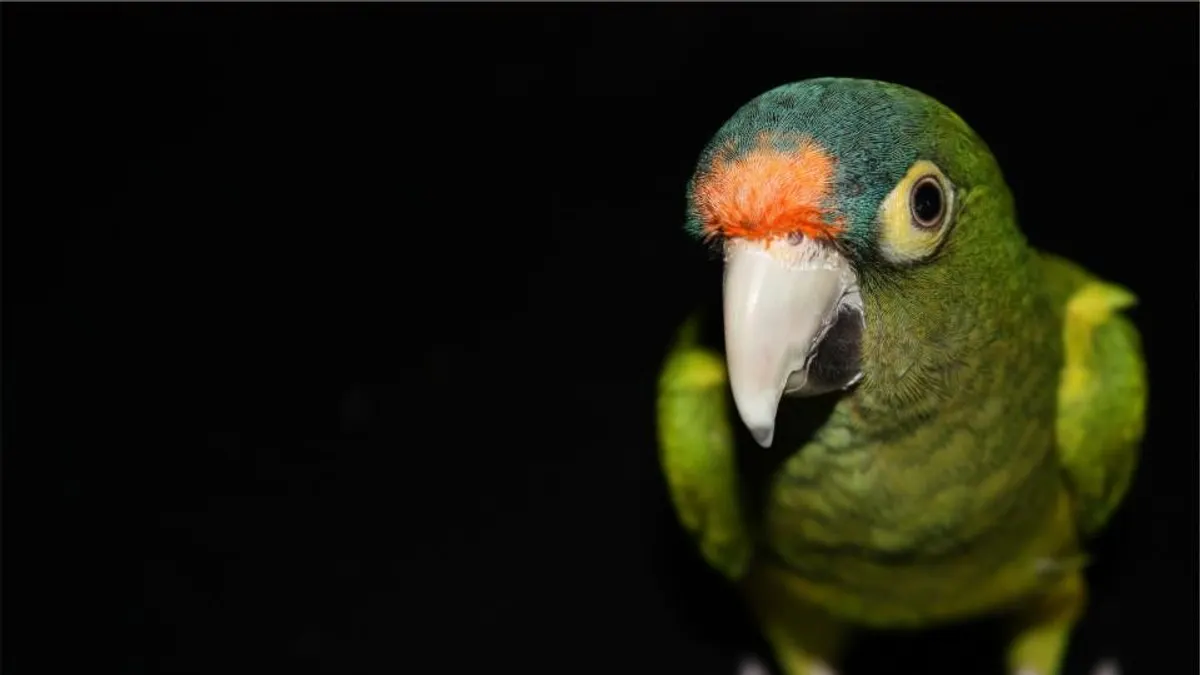
Cover photo: Green Parrot by Ruth Caron, CC0 1.0, via StockSnap. Cropped.
Related guides
Bird Cage Bar Spacing Guide: The Right Gap for Every Species, and Why
The Merck bar-spacing figures by species, the finger test, why gauge matters as much as gap for big birds, and cages that match each figure.
Bird Cage Buying Guide: Size, Spacing, Material, Doors, Tray and Price, in Order
The checks in order before buying any cage: species minimum, spacing and gauge, material, shape, doors, tray, stand, the listing's traps and the price by size class.
Bird Cage Cleaning and Disinfecting Guide: Daily, Weekly and the Full Sequence
The daily routine from VCA and PetMD, the CDFA's six-step deep clean with label-only disinfecting, and the products and fumes to keep out of a bird room.