
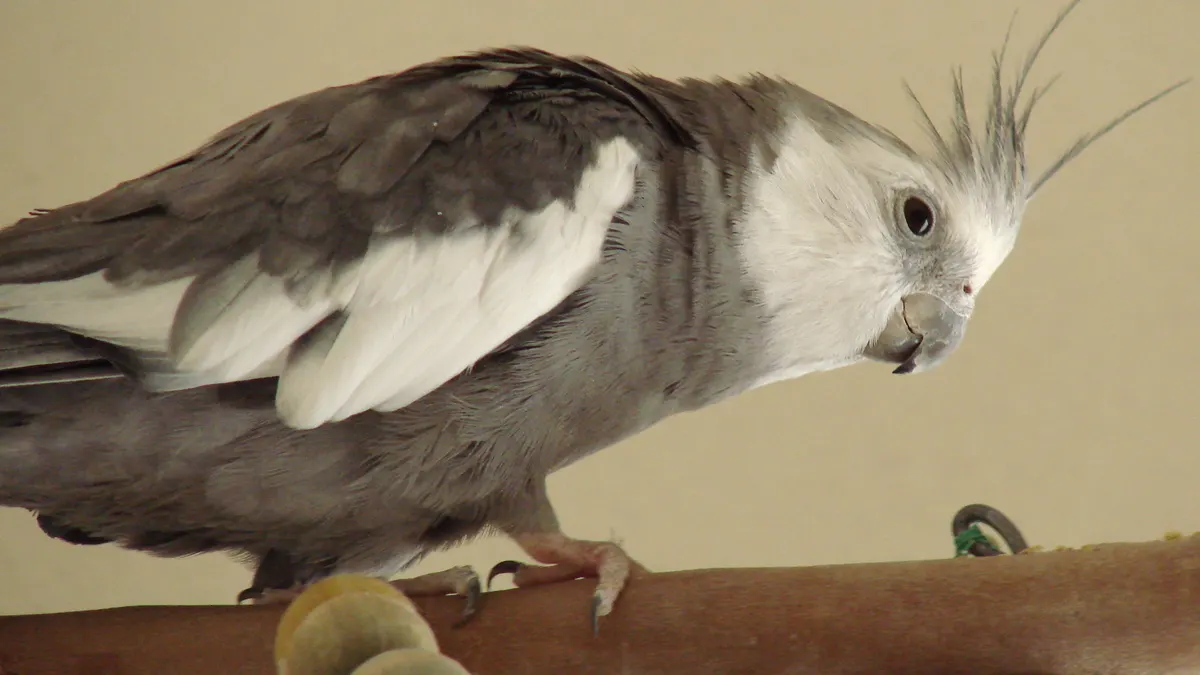
Best Cockatiel Food (2026): Pellets Compared by the Label
Affiliate disclosure: product links on this page go to Amazon, or to the maker's own store for brands that sell only direct. As an Amazon Associate we earn from qualifying purchases, at no extra cost to you; a link to a maker's store earns us nothing. No retailer or brand sees our picks before they are published or has any say in them. How we choose.
The best cockatiel food is a pellet made for the cockatiel's size, fed as most of the diet, with vegetables on the side. VCA Animal Hospitals' avian vets put pellets at about 75% to 80% of a cockatiel's diet and say seed should be a very small part of it, never all of it. Our top pick is Lafeber's Premium Daily Diet Cockatiel Pellets: sized for cockatiels, and Lafeber publishes a full nutrient analysis, including vitamin A at 7,000 IU/kg, inside the range the Merck Veterinary Manual gives for pelleted diets.
For a bird still on seed, Harrison's High Potency Fine is the conversion food, followed by Adult Lifetime Fine. For a plain pellet with no added sugar or colors, there is Roudybush Daily Maintenance. Every pick here was compared on the maker's own guaranteed analysis and ingredient list, not on marketing copy.
Our top picks at a glance
1. Best overall
Lafeber Premium Daily Diet Cockatiel Pellets (1.25 lb, 2-pack)Type: Pellet, cockatiel size · Protein / fat: 16.5% min / 5.0% min (per the maker) · Sugar or molasses: Cane molasses, for flavor (per the maker) · Artificial colors: None listed
2. Best for converting a seed eater
Harrison's High Potency Fine (5 lb)Type: Fine pellet (crumble), certified organic · Protein / fat: 18% min / 12% min (per the maker) · Sugar or molasses: None listed · Artificial colors: None listed
3. Best organic maintenance pellet
Harrison's Adult Lifetime Fine (1 lb)Type: Fine pellet (crumble), certified organic · Protein / fat: 14% min / 6% min (per the maker) · Sugar or molasses: None listed · Artificial colors: None listed
4. Best plain pellet
Roudybush Daily Maintenance, Crumble (2.75 lb)Type: Crumble pellet · Protein / fat: Not shown on the maker's product page · Sugar or molasses: No added sugars (per the Amazon listing) · Artificial colors: No added colors (per the Amazon listing)
5. Best widely stocked pellet without dyes
ZuPreem True Harvest, Medium (2.5 lb)Type: Pellet, medium (cockatiel) size · Protein / fat: 14% min / 4% min (per the maker) · Sugar or molasses: Sugar listed (per the maker) · Artificial colors: None listed
6. Best for foraging and diet conversion
Lafeber Classic Nutri-Berries for Cockatiels (4 lb)Type: Seed and grain berry, cockatiel size · Protein / fat: 12.5% min / 6.0% min (per the maker) · Sugar or molasses: Corn syrup and maltodextrin listed (per the maker) · Artificial colors: Natural color only (per the maker)
| Pick | Type | Protein / fat | Sugar or molasses | Artificial colors | Buy |
|---|---|---|---|---|---|
| Lafeber Premium Daily Diet Cockatiel Pellets (1.25 lb, 2-pack)Best overall | Pellet, cockatiel size | 16.5% min / 5.0% min (per the maker) | Cane molasses, for flavor (per the maker) | None listed | Amazon |
| Harrison's High Potency Fine (5 lb)Best for converting a seed eater | Fine pellet (crumble), certified organic | 18% min / 12% min (per the maker) | None listed | None listed | Amazon |
| Harrison's Adult Lifetime Fine (1 lb)Best organic maintenance pellet | Fine pellet (crumble), certified organic | 14% min / 6% min (per the maker) | None listed | None listed | Amazon |
| Roudybush Daily Maintenance, Crumble (2.75 lb)Best plain pellet | Crumble pellet | Not shown on the maker's product page | No added sugars (per the Amazon listing) | No added colors (per the Amazon listing) | Amazon |
| ZuPreem True Harvest, Medium (2.5 lb)Best widely stocked pellet without dyes | Pellet, medium (cockatiel) size | 14% min / 4% min (per the maker) | Sugar listed (per the maker) | None listed | Amazon |
| Lafeber Classic Nutri-Berries for Cockatiels (4 lb)Best for foraging and diet conversion | Seed and grain berry, cockatiel size | 12.5% min / 6.0% min (per the maker) | Corn syrup and maltodextrin listed (per the maker) | Natural color only (per the maker) | Amazon |
Best overall
Lafeber Premium Daily Diet Cockatiel Pellets (1.25 lb, 2-pack)
A pellet made in a cockatiel size, with a full nutrient analysis published by the maker, which made the first bird pellets in 1975.
- Type
- Pellet, cockatiel size
- Protein / fat
- 16.5% min / 5.0% min (per the maker)
- Sugar or molasses
- Cane molasses, for flavor (per the maker)
- Artificial colors
- None listed
Pros
- Sized for cockatiels, not a one-size small-bird pellet
- Vitamin A 7,000 IU/kg, inside Merck's 5,000 to 8,000 IU/kg range
- Whole egg as a protein source; preserved with mixed tocopherols
Cons
- Cane molasses is the fifth ingredient
- Sold in 1.25 lb tubs, so a multi-bird home goes through them fast
- Not organic
Lafeber makes its Premium Daily Diet in six sizes, one of them for cockatiels, and its veterinary product page gives a long nutrient table rather than the four-line minimum most bags carry. For the cockatiel size it lists protein at 16.5% minimum, fat 5.0% minimum, fiber 4.0% maximum, calcium 0.80% and vitamin A 7,000 IU/kg. That vitamin A figure matters: the Merck Veterinary Manual's chapter on psittacine nutrition says pelleted diets should contain 5,000 to 8,000 IU/kg and warns against going higher.
The ingredients are ground corn, soybean meal, wheat flour, oat groats, cane molasses and dried whole egg, then the vitamins and minerals. The molasses is there for taste, and it is the main reason a bird used to sweet foods may take to it. Lafeber says the pellets can be fed as a maintenance diet alongside produce or its Nutri-Berries.
Best for converting a seed eater
Harrison's High Potency Fine (5 lb)
Harrison's richer organic formula, which the maker says every bird should start on and stay on for at least six months.
- Type
- Fine pellet (crumble), certified organic
- Protein / fat
- 18% min / 12% min (per the maker)
- Sugar or molasses
- None listed
- Artificial colors
- None listed
Pros
- Certified organic grains, legumes and seeds
- No sugar, molasses or added color in the ingredient list
- Harrison's lists cockatiels by name for the Fine size
Cons
- 12% minimum fat is high for an inactive adult, which is why Harrison's moves birds on after six months
- Sold on Amazon by a third-party seller, not by Amazon.com
- Comes as a 5 lb bag, a lot for one bird to finish while fresh
Harrison's says birds should start on and remain on a High Potency formula for at least six months, and its own conversion pages are written around this food. The Fine size is listed for cockatiels, budgies, lovebirds, conures, quakers and other small to medium birds. The guaranteed analysis is 18% protein minimum and 12% fat minimum, with no sugar, molasses or color in the ingredients.
That fat level is the point and the limit. It helps a bird coming off a seed diet keep its weight while it learns a new food, and Harrison's recommends moving to Adult Lifetime once the six months are up. The maker also advises talking to an avian vet before any diet change, which is good advice with every food on this page.
Best organic maintenance pellet
Harrison's Adult Lifetime Fine (1 lb)
The lower-fat Harrison's formula for a healthy adult cockatiel that is not breeding or molting.
- Type
- Fine pellet (crumble), certified organic
- Protein / fat
- 14% min / 6% min (per the maker)
- Sugar or molasses
- None listed
- Artificial colors
- None listed
Pros
- Certified organic, non-GMO whole grains and legumes
- Half the minimum fat of High Potency
- Sold in 1 lb bags, so it stays fresh for one bird
Cons
- Harrison's says to use it only after six months on High Potency
- Not for breeding or molting birds, per the maker
- Vitamin A amount is not stated on the maker's page
Adult Lifetime Fine is Harrison's maintenance diet for healthy, non-breeding, non-molting small to medium birds, cockatiels named among them. The guaranteed analysis is 14% protein minimum, 6% fat minimum and 5% fiber maximum. The ingredients start with whole corn, hull-less barley, hulled millet and toasted soybeans, and the maker marks the grains and legumes as certified organic.
Harrison's suggests a daily diet of 75% to 80% of its food with 15% to 20% dark green leafy or dark yellow vegetables and fruit, which lines up with VCA's split. Its page also says not to give extra vitamins unless an avian vet directs it.
Best plain pellet
Roudybush Daily Maintenance, Crumble (2.75 lb)
A long-standing maintenance pellet with no added sugar or colors, in a crumble that small beaks pick up easily.
- Type
- Crumble pellet
- Protein / fat
- Not shown on the maker's product page
- Sugar or molasses
- No added sugars (per the Amazon listing)
- Artificial colors
- No added colors (per the Amazon listing)
Pros
- Roudybush says no extra vitamin or mineral supplements are needed
- Five pellet sizes from the maker, from Nible to Medium
- Sold by Roudybush on Amazon
Cons
- No guaranteed analysis on the maker's product page we read
- Plain taste can be a hard sell for a bird used to seed
- The crumble leaves dust at the bottom of the dish
Roudybush's Daily Maintenance is the formula the maker says to use when switching a bird to its food and to keep feeding adult birds that are not laying or feeding chicks. Its page tells owners not to add vitamin or mineral supplements and says fruit and vegetables can be a minor part of the diet. Its Amazon listing says it has no added sugars or colors, and Roudybush's Crumble listings on Amazon name cockatiels among the birds it suits.
We would like to show its protein and fat beside the others, but the maker's product page does not list a guaranteed analysis, so check the bag. For a cockatiel prone to egg laying, Roudybush suggests mixing two thirds Maintenance with one third of its High-Energy Breeder diet for extra calcium and vitamin D3; ask your vet before doing that.
Best widely stocked pellet without dyes
ZuPreem True Harvest, Medium (2.5 lb)
ZuPreem's multigrain pellet for medium birds, with vegetables in the recipe and no color additives.
- Type
- Pellet, medium (cockatiel) size
- Protein / fat
- 14% min / 4% min (per the maker)
- Sugar or molasses
- Sugar listed (per the maker)
- Artificial colors
- None listed
Pros
- No color additives in the ingredient list
- Feeding guide on the maker's page: 1/8 to 1/4 cup a day for a cockatiel
- Easy to find in pet stores as well as online
Cons
- Sugar is in the ingredient list
- 4% minimum fat, the lowest of the picks, so watch weight on a bird that is converting
True Harvest Medium is ZuPreem's dye-free pellet for cockatiels, quakers, lovebirds and small conures. The guaranteed analysis is 14% protein minimum, 4% fat minimum and 5% fiber maximum, and the ingredients are ground grains and soybean meal with sugar, vegetable oil, celery, carrots, parsley, beets, blueberries, cranberries and flaxseed. ZuPreem suggests 1/8 to 1/4 cup a day for a cockatiel, adjusted to keep the bird in good body condition.
ZuPreem's better known FruitBlend Medium is the colorful one. Its ingredient list on ZuPreem's site includes sugar plus Yellow 5, Red 40, Yellow 6 and Blue 1. Some owners use it to tempt a picky bird; if yours eats True Harvest, there is no nutritional reason on the label to switch.
Best for foraging and diet conversion
Lafeber Classic Nutri-Berries for Cockatiels (4 lb)
Seed and grain rolled into a berry with vitamins on it, so a seed-loving bird has to work for a complete food.
- Type
- Seed and grain berry, cockatiel size
- Protein / fat
- 12.5% min / 6.0% min (per the maker)
- Sugar or molasses
- Corn syrup and maltodextrin listed (per the maker)
- Artificial colors
- Natural color only (per the maker)
Pros
- Looks and tastes like seed, which is why converting birds accept it
- Round berry gives the beak and feet something to do
- Lafeber says it can be fed for maintenance or conversion
Cons
- Corn syrup and maltodextrin in the ingredients
- Lowest protein minimum of the six
- A bird can still pick out the parts it likes
Classic Nutri-Berries are hulled canary seed, millet, oats and peanuts bound into a berry and coated with vitamins, minerals and amino acids. Lafeber's veterinary page says they can be fed for maintenance or dietary conversion, and calls them a foraging food. For the cockatiel size it lists 12.5% protein minimum, 6.0% fat minimum, 5.0% fiber maximum and 14.0% moisture maximum.
We rank it as a partner to a pellet, not a replacement. It is the food most likely to get a seed eater interested in something new, and holding a berry and breaking it up is more work than shelling loose seed. Offer a few in a foraging toy; our bird toy guide has refillable ones for small birds.
How we chose
We started from the diet advice of two veterinary sources: VCA Animal Hospitals' cockatiel feeding page and the Merck Veterinary Manual. Every pick had to be a formulated diet sold in a size the maker names for cockatiels, in stock on Amazon US on October 20, 2026, with an ingredient list we could read on the maker's own site. We compared protein, fat, added sugar and added color from those lists, and left out seed mixes sold as complete diets. Ratings and price were not reasons for any pick.
The labels side by side
Guaranteed analysis figures are minimums for protein and fat and maximums for fiber, as printed by each maker. They are not the exact content of the bag.
| Food | Protein (min) | Fat (min) | Fiber (max) | Sweetener listed | Colors listed |
|---|---|---|---|---|---|
| Lafeber Premium Daily Diet, Cockatiel | 16.5% | 5.0% | 4.0% | Cane molasses | None |
| Harrison's High Potency Fine | 18% | 12% | 6% | None | None |
| Harrison's Adult Lifetime Fine | 14% | 6% | 5% | None | None |
| ZuPreem True Harvest, Medium | 14% | 4% | 5% | Sugar | None |
| ZuPreem FruitBlend, Medium | 14% | 4% | 3.5% | Sugar | Yellow 5, Red 40, Yellow 6, Blue 1 |
| Lafeber Nutri-Berries, Cockatiel | 12.5% | 6.0% | 5.0% | Corn syrup, maltodextrin | Natural color |
| Roudybush Daily Maintenance | Not on the maker's product page | No added sugar (Amazon listing) | No added color (Amazon listing) | ||
Sources: each maker's product page, linked under Sources. Merck's psittacine nutrition chapter gives 7% to 12% protein as the adult maintenance level for cockatiels and budgies and notes that cockatiels without kidney disease have tolerated much higher protein in a study, so a pellet's higher minimum is not a red flag on its own.
How much pellet, seed and produce
The two vet sources do not give the same split, so here are both.
| Source | Pellets | Seed | Vegetables and fruit |
|---|---|---|---|
| VCA Animal Hospitals (cockatiels) | About 75% to 80% | A very small part, never the whole diet | No more than 20% to 25% |
| Merck Veterinary Manual (small birds incl. cockatiels) | 40% to 50% | 30% to 40% seed mix | 10% to 15% vegetables, 5% to 10% fruit |
VCA is the stricter of the two on seed. Both agree that an all-seed diet falls short: Merck's management chapter says seed mixes are high in fat and short on calcium and vitamin A, and its nutrition chapter notes vitamin A deficiency has historically been seen in parrots on all-seed diets. VCA also says a cockatiel eating 75% to 80% pellets does not need supplements, and that any vitamin, mineral or omega supplement should be given only under an avian vet's guidance. Your vet can set the split for your bird.
What to look for
Size
Buy the size the maker names for cockatiels: "Cockatiel" for Lafeber, "Fine" for Harrison's, "Medium" for ZuPreem. A pellet that is too large gets dropped, and dropped food is wasted food in the cage tray.
Sweeteners and dyes
Read the ingredient list, not the front of the bag. Molasses, sugar, corn syrup and dyes are there to make a food appealing, and the makers say so. If your bird eats a plain pellet, keep it on a plain pellet.
Freshness
Lafeber stamps a best-before date on the lid; check it on any bag. Buy an amount one bird finishes while it is fresh, and store it sealed.
What goes with it
VCA says to offer vegetables in a separate dish, cut to bird size, and remove them within a couple of hours, and that pale watery vegetables such as iceberg lettuce and celery offer little. It names avocado and onion as foods never to give, along with chocolate, alcohol and caffeine, and says to remove apple seeds. Our bird toxins database has the longer list. Fresh water must be there at all times, in dishes cleaned daily; our food and water dispenser guide covers the hardware.
Switching a cockatiel from seed to pellets
Merck gives a slow schedule: mix pellets and seed at 20% pellets for about two weeks, then step up to 30%, 50%, 75% and 100%, about two weeks per step. It says to offer the new food in the morning when the bird is hungriest, offer seed in the evening, and to start only with a bird that is not underweight or sick.
- Weigh the bird in grams before you start, and weigh it daily at the same time. Merck says to call the vet if it loses more than 10% of its body weight; Harrison's calls weight swings over 10% a problem.
- Watch the droppings. Harrison's says a sharp drop in the number or volume of droppings means the bird is not eating enough.
- Try the tricks VCA lists: pellets first thing in the morning, pellets scattered on a flat surface, pellets ground into powder over a moist food the bird likes.
- If the bird refuses the new food, go back to the old diet. Harrison's warns small birds can starve within 36 to 48 hours.
VCA says conversion can take days, weeks or months. Remove the seed only once the bird reliably eats pellets and some vegetables.
What to skip
- Seed mixes as the whole diet, including mixes labeled "complete" or "fortified". VCA says vitamin powders sprinkled on the outside of seeds are of little value.
- Grit. VCA says grit and gravel should not be offered to cockatiels, because birds can eat too much and develop intestinal blockages.
- Vitamin drops on top of a pelleted diet, unless your avian vet prescribes them.
- Honey sticks and millet spray as daily food. VCA lists them as nutritionally incomplete; keep them for treats and training.
Set the food and water dishes where your bird can reach them from a perch and where droppings will not fall into them; our cage setup guide shows the layout, and our cockatiel cage guide covers the cage itself.
Frequently asked questions
What is the best food for a cockatiel?
A pellet made in a cockatiel size, fed as most of the diet with vegetables on the side. VCA Animal Hospitals puts pellets at about 75% to 80% of a cockatiel's diet. Our top pick is Lafeber's Premium Daily Diet Cockatiel Pellets; Harrison's is the organic choice.
Can cockatiels live on seeds only?
Vets advise against it. VCA says seed should never be the entire diet, and the Merck Veterinary Manual says seed mixes are high in fat and deficient in calcium and vitamin A. Seed can stay as a small part of the diet or a treat.
How much should a cockatiel eat a day?
ZuPreem's feeding guide for its medium pellets says 1/8 to 1/4 cup a day for a cockatiel, adjusted to body condition. Harrison's says birds may eat as much of its food as they want. Either way, a gram scale is the simplest check on whether the amount is right.
What fruits and vegetables can cockatiels eat?
VCA suggests washed vegetables and some fruit, cut to bird size, as no more than 20% to 25% of the diet, and says pale watery vegetables such as iceberg lettuce and celery offer little. Never feed avocado or onion, and remove apple seeds.
Do cockatiels need grit?
No. VCA says grit and gravel should not be offered to cockatiels, because birds can eat too much of it and develop a life-threatening intestinal blockage.
How long does it take to switch a cockatiel to pellets?
Weeks to months. The Merck Veterinary Manual's schedule raises the pellet share in steps of about two weeks, from 20% up to 100%. Weigh the bird daily and call the vet if it loses more than 10% of its weight.
Sources
- Feeding Pet Cockatiels, VCA Animal Hospitals (Gregory Rich, DVM; Laurie Hess, DVM; Rick Axelson, DVM)
- Management of Pet Birds, Merck Veterinary Manual (Sharman M. Hoppes, DVM)
- Nutrition in Psittacines, Merck Veterinary Manual (Joeke Nijboer, PhD; Anouk Fens, MSc)
- Cockatiel Pellets 1.25 lb (567 g), Lafeber Company
- Cockatiel Nutri-Berries 4 lb, Lafeber Company
- High Potency Fine, Harrison's Bird Foods
- Adult Lifetime Fine, Harrison's Bird Foods
- Diet Conversion: Small Birds, Harrison's Bird Foods
- True Harvest, ZuPreem
- FruitBlend, ZuPreem
Cover photo: Sweetie Lee by *~Dawn~*, CC BY 2.0, via Wikimedia Commons. Cropped.
Related guides
Best Bird Toys for Parrots (2026), Matched to Your Bird's Size
Seven toys from budgie to macaw size, picked against Lafeber's veterinary toy-safety handout: soft wood for small beaks, foragers, shredders, and a puzzle wheel for birds that swallow pieces.
Best Air Purifiers for Bird Dander (2026): Sized by CADR, Not by the Box
Three AHAM-rated HEPA purifiers sized to a bird room by CADR, the 2/3 rule applied to each, and the big-number units left out for publishing no CADR.

Best Bird Cage Cleaning Supplies (2026): Enzyme Sprays, Liners, Baths and Covers
Nine cleaning products judged on label directions, liners by size and count, baths and covers, plus the wash-rinse-disinfect-dry sequence from the sources.