
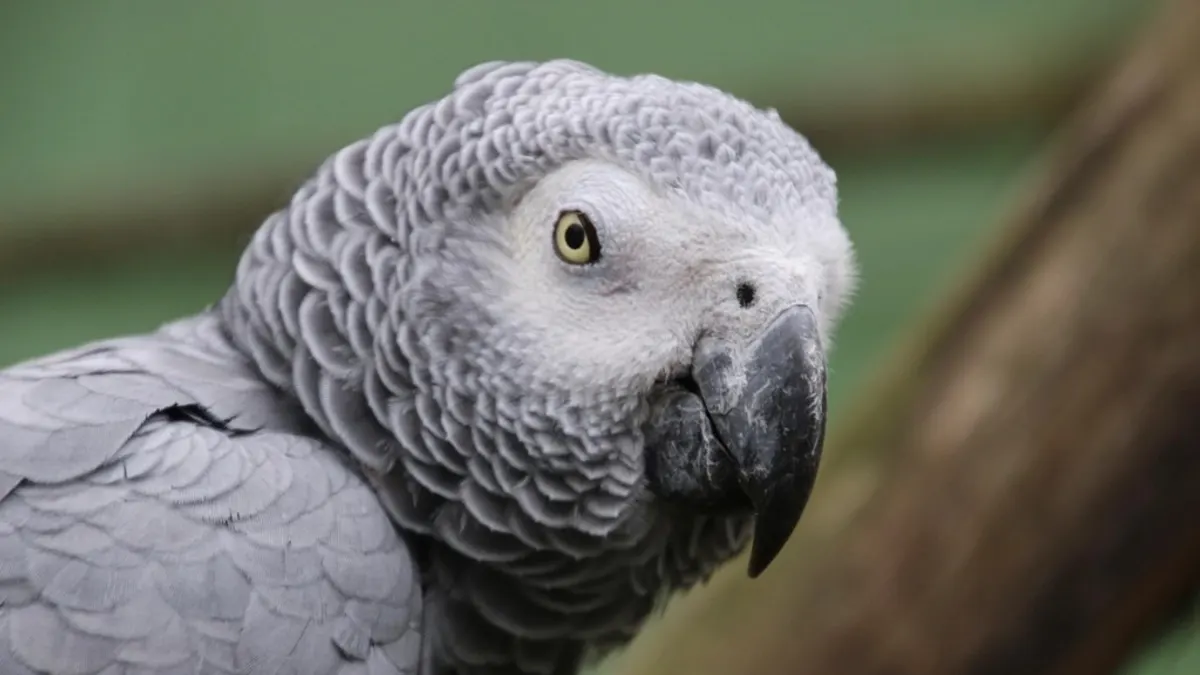
Best African Grey Food (2026): Pellets Checked for Calcium and Vitamin D
Affiliate disclosure: product links on this page go to Amazon or to the maker's own store. As an Amazon Associate we earn from qualifying purchases, and VEVOR pays us a commission on sales through our VEVOR links, at no extra cost to you; links to other makers' stores earn us nothing. No retailer or brand sees our picks before they are published or has any say in them. How we choose.
The best African grey food is a pellet in a size the maker names for greys, fed as the base of the diet with vegetables alongside. VCA Animal Hospitals' avian vets say greys fed mostly seed are more prone to calcium deficiency than other large parrots, and are also vulnerable to vitamin A deficiency and obesity. Our top pick is ZuPreem True Harvest for Parrots & Conures: ZuPreem names African greys for this size, gives a grey's serving as 1/2 cup a day, adds no colors, and it is the only food here whose label prints a vitamin D level (500 IU/kg minimum, the bottom of the 500 to 1,000 IU/kg the Merck Veterinary Manual gives for greys kept out of the sun). It was sold by Amazon itself when we checked on November 7, 2026.
For a grey with a history of low calcium, Roudybush is the one maker that writes greys into its directions: two parts Daily Maintenance to one part High Energy Breeder. Every pick was held to Merck's figures on the maker's own label and is sold by Amazon or the maker's own store.
Our top picks at a glance
- ZuPreem True Harvest, Parrots & Conures (M/L, 3 lb)
Size for greys: Parrots & Conures (M/L); greys named by the maker · Protein / fat (min): 14% / 4% (per the maker) · Vitamin D on the label: 500 IU/kg minimum (per the maker) · Sweetener or color: Sugar listed; no added colors
2. Best for a grey prone to low calcium
Roudybush Daily Maintenance, Medium (10 lb)Size for greys: Medium, the largest Daily Maintenance size · Protein / fat (min): Not on the maker's product page · Vitamin D on the label: No level printed; Breeder adds D3 (per the maker) · Sweetener or color: Not stated on the maker's page
3. Best for switching off seed
Harrison's High Potency Coarse (5 lb)Size for greys: Coarse; greys named by the maker · Protein / fat (min): 18% / 13.5% (per the maker) · Vitamin D on the label: Listed, no level printed · Sweetener or color: None listed
- Lafeber Premium Daily Diet Parrot Pellets (5 lb)
Size for greys: Parrot size; greys named by the maker · Protein / fat (min): 13.1% / 4.6% (per the maker) · Vitamin D on the label: D3 listed, no level printed · Sweetener or color: Cane molasses; no artificial colors
- Lafeber Tropical Fruit Nutri-Berries for Parrots (3 lb)
Size for greys: Parrot size; 15 berries at a time for greys (per the maker) · Protein / fat (min): 10% / 6% (per the maker) · Vitamin D on the label: D3 listed, no level printed · Sweetener or color: Corn syrup and maltodextrin; natural color
| Pick | Size for greys | Protein / fat (min) | Vitamin D on the label | Sweetener or color | Buy |
|---|---|---|---|---|---|
| ZuPreem True Harvest, Parrots & Conures (M/L, 3 lb)Best overall | Parrots & Conures (M/L); greys named by the maker | 14% / 4% (per the maker) | 500 IU/kg minimum (per the maker) | Sugar listed; no added colors | Amazon |
| Roudybush Daily Maintenance, Medium (10 lb)Best for a grey prone to low calcium | Medium, the largest Daily Maintenance size | Not on the maker's product page | No level printed; Breeder adds D3 (per the maker) | Not stated on the maker's page | Amazon |
| Harrison's High Potency Coarse (5 lb)Best for switching off seed | Coarse; greys named by the maker | 18% / 13.5% (per the maker) | Listed, no level printed | None listed | Amazon |
| Lafeber Premium Daily Diet Parrot Pellets (5 lb)Best for a picky eater | Parrot size; greys named by the maker | 13.1% / 4.6% (per the maker) | D3 listed, no level printed | Cane molasses; no artificial colors | Amazon |
| Lafeber Tropical Fruit Nutri-Berries for Parrots (3 lb)Best foraging food | Parrot size; 15 berries at a time for greys (per the maker) | 10% / 6% (per the maker) | D3 listed, no level printed | Corn syrup and maltodextrin; natural color | Amazon |
A dye-free pellet ZuPreem names for African greys, with a grey serving on the maker's page and the only printed vitamin D level of the picks.
- Size for greys
- Parrots & Conures (M/L); greys named by the maker
- Protein / fat (min)
- 14% / 4% (per the maker)
- Vitamin D on the label
- 500 IU/kg minimum (per the maker)
- Sweetener or color
- Sugar listed; no added colors
Pros
- ZuPreem names African greys for this size and gives 1/2 cup a day as their serving
- Vitamin D printed at 500 IU/kg minimum, the low end of Merck's 500 to 1,000 IU/kg for greys without sunlight
- Sold by Amazon itself in a 3 lb bag on November 7, 2026
Cons
- Sugar is in the ingredient list
- Corn and soybean meal lead the recipe
- No calcium or vitamin A level on the label, only the ingredients that supply them
True Harvest is ZuPreem's multigrain pellet without color additives. ZuPreem labels the Parrots & Conures size for "Conures, Caiques, African Greys, Senegals, Amazons, Eclectus, Small Cockatoos" and other medium to large parrots, and its feeding directions give African greys 1/2 cup a day, adjusted to the bird's body condition. The guaranteed analysis is 14% protein minimum, 4% fat minimum and 5% fiber maximum, with vitamin D at 500 IU/kg minimum.
The ingredients start with ground corn, soybean meal, millet, oat groats, barley and wheat, then sugar and vegetable oil, followed by celery, carrots, parsley, beets, flaxseed, blueberries and cranberries. Calcium carbonate and dicalcium phosphate supply calcium, and vitamin A acetate and vitamin D3 are in the vitamin pack.
Skip it if you want a pellet with no added sugar; Harrison's High Potency Coarse lists none. ZuPreem's colored FruitBlend has the same protein, fat and vitamin D figures and adds five artificial colors in this size, so if your grey eats the plain pellet, the label gives no reason to switch.
Best for a grey prone to low calcium
Roudybush Daily Maintenance, Medium (10 lb)
The only maker here that writes African greys into its directions: two parts Daily Maintenance to one part High Energy Breeder for more calcium and vitamin D3.
- Size for greys
- Medium, the largest Daily Maintenance size
- Protein / fat (min)
- Not on the maker's product page
- Vitamin D on the label
- No level printed; Breeder adds D3 (per the maker)
- Sweetener or color
- Not stated on the maker's page
Pros
- Roudybush's own directions name African greys: mix 2/3 Maintenance with 1/3 High Energy Breeder for more calcium and vitamin D3
- Roudybush says to add no vitamin or mineral supplements to its food, so nothing gets doubled up
- Both bags were sold by Roudybush on Amazon on November 7, 2026
Cons
- Two bags to buy and mix
- No guaranteed analysis on Roudybush's product pages
- No daily serving for a grey on the maker's page
Roudybush's Daily Maintenance page says that for "a bird with a tendency to develop hypocalcaemia (like African Greys)," you should mix 2/3 Maintenance with 1/3 High-Energy Breeder "to supply more calcium and vitamin D3," and give no additional vitamin or mineral supplements. Its bird FAQ repeats the mix and adds that a bird that also tends to get overweight should get 2/3 Low-Fat Maintenance with 1/3 Breeder instead, for the calcium and D3 without as much fat. Roudybush counts a bird as obese at 15% or more over the expected weight for its species.
Roudybush describes High Energy Breeder as a diet with extra protein, calcium and vitamin D3 for birds feeding chicks and for newly weaned young. Its store lists Daily Maintenance in sizes from Nible up to Medium, and its FAQ says to choose by the size of the bird's beak, so Medium is the one for a grey. Neither product page prints a guaranteed analysis, so this pick rests on the maker's written directions rather than on figures we could compare.
Ask your avian vet before adding the Breeder for a grey with kidney trouble: Roudybush's own FAQ says toxic levels of calcium and vitamin D3 may cause kidney damage.
Best for switching off seed
Harrison's High Potency Coarse (5 lb)
Harrison's names African greys for High Potency Coarse, the richest organic formula here, built for the months a grey spends converting.
- Size for greys
- Coarse; greys named by the maker
- Protein / fat (min)
- 18% / 13.5% (per the maker)
- Vitamin D on the label
- Listed, no level printed
- Sweetener or color
- None listed
Pros
- Harrison's names African greys for High Potency Coarse and keeps every converting bird on it for at least 6 months
- Certified organic grains and legumes, with no sugar or color in the ingredient list
- Sold by Harrison's Bird Foods on Amazon in 1 lb and 5 lb bags
Cons
- The 13.5% fat minimum is above the 5% to 12% range Merck gives for parrot diets
- Harrison's says to use an opened bag within 12 weeks and keep it in the original bag
- Peanut and sunflower kernels are in the recipe
Harrison's describes High Potency Coarse as a year-round formula for medium to large parrots, "especially cockatoos, large conures, African greys, eclectus, macaws and pionus." Every bird starting on Harrison's should stay on High Potency for at least six months, after which Harrison's recommends an avian vet assess the bird's needs. It says other species may move to its Adult Lifetime formula, and the Adult Lifetime Coarse page names pionus, Amazons, cockatoos and macaws, not greys.
The guaranteed analysis is 18% protein minimum, 13.5% fat minimum and 6.5% fiber maximum, the richest of the picks. Merck puts adult maintenance protein for grey and Timneh parrots at 10% to 15% and parrot diets at 5% to 12% fat, so read this as a conversion and special-needs food; Harrison's own list of uses covers molting, breeding, underweight and overweight birds. Hull-less barley, sunflower kernels and toasted soybeans lead the ingredients, calcium comes from calcium carbonate, and vitamins A and D are in the supplement without printed levels.
Harrison's conversion plan mixes its food into the old diet and raises it by 25% a week over four weeks. Buy the 1 lb bag first if you are not sure your grey will eat it.
Best for a picky eater
Lafeber Premium Daily Diet Parrot Pellets (5 lb)
Lafeber's molasses-flavored parrot pellet, written for Amazons and African greys, with egg protein and no artificial colors.
- Size for greys
- Parrot size; greys named by the maker
- Protein / fat (min)
- 13.1% / 4.6% (per the maker)
- Vitamin D on the label
- D3 listed, no level printed
- Sweetener or color
- Cane molasses; no artificial colors
Pros
- Lafeber's product page names Amazons and African greys
- Flavored with molasses, which Lafeber says helps when converting seed eaters
- Sold by Lafeber Company on Amazon on November 7, 2026
Cons
- Cane molasses is the fourth ingredient
- No feeding amount on the product page
- Vitamin A and D3 are listed without levels
Lafeber's parrot pellet page says parrots "like Amazons and African greys" may choose seed and other high-fat foods over better ones, and that its Premium Daily Pellets are flavored with molasses to improve acceptance when "seed junkies" are converted. The guaranteed analysis is 13.1% protein minimum, 4.6% fat minimum and 3.5% fiber maximum.
Ground corn, soybean meal, wheat flour and cane molasses come first, then hulled oats and dried whole egg. Dicalcium phosphate and ground limestone supply calcium, and vitamin A, beta-carotene and vitamin D3 are added. Lafeber says the pellets can be a full meal or part of the diet alongside its Nutri-Berries and Avi-Cakes. If you want a pellet with no added sweetener at all, Harrison's is the pick; ZuPreem lists sugar too.
Best foraging food
Lafeber Tropical Fruit Nutri-Berries for Parrots (3 lb)
Lafeber's seed-and-pellet balls in the parrot size, the food Lafeber's own African grey page recommends for foraging.
- Size for greys
- Parrot size; 15 berries at a time for greys (per the maker)
- Protein / fat (min)
- 10% / 6% (per the maker)
- Vitamin D on the label
- D3 listed, no level printed
- Sweetener or color
- Corn syrup and maltodextrin; natural color
Pros
- Lafeber's feeding instructions give African greys 15 berries at a time
- Round berries a grey can hold in its foot and pick apart
- Sold by Lafeber Company on Amazon in 3 lb and 10 oz sizes
Cons
- Corn syrup, maltodextrin and peanuts are in the ingredient list
- Built on hulled millet and seed, which VCA wants kept to a small share of a grey's diet
- The lowest protein minimum of the picks
Nutri-Berries are hulled seeds and grains bound with fortified pellet. The tropical fruit version adds dried pineapple, papaya and mango, and its guaranteed analysis is 10% protein minimum, 6% fat minimum and 5% fiber maximum. Ground corn, hulled white proso millet and the dried fruit lead the ingredients, followed by safflower, soybean meal and red millet; corn syrup, maltodextrin and peanuts come further down, and vitamins A and D3 are added.
Lafeber's African grey page recommends Nutri-Berries for foraging, and its product page cites a 2013 Utrecht University study of 12 grey parrots. In the study's abstract, larger food pieces were one of eleven foraging enrichments tested; the most effective raised foraging time 2 to 2.5 times over a 47-minute baseline, still short of the 4 to 6 hours a day wild greys spend foraging. Lafeber says the parrots in that study spent twice as long eating Nutri-Berries as pellets.
Lafeber says Nutri-Berries can be fed as a complete diet or as a snack. For a grey, we would use them the second way: a few berries in a foraging toy on top of a pellet base, so the seed stays the small share VCA asks for.
How we chose
We started from VCA Animal Hospitals' African grey feeding page (updated October 23, 2026) and two Merck Veterinary Manual chapters, one on psittacine nutrition and one on nutritional diseases. Every pick had to be a formulated food whose maker names African greys or gives a size for them, with an ingredient list on the maker's site that we read on November 7, 2026, and it had to be sold by Amazon or by the maker's own store. We then held each label to Merck's figures for greys. TOP's Parrot Pellets, an organic pellet TOP's lists for African greys, was left out because its Amazon listing was sold by a third-party seller. Ratings and price were not reasons for any pick.
Why a grey's food needs more care than most
Three sources agree on the risk. VCA says African greys fed mostly seed are more prone to calcium deficiency than other large parrots, and are also vulnerable to vitamin A deficiency and obesity. Merck's chapter on nutritional diseases says greys are prone to an acute hypocalcemia syndrome tied to both low calcium and low vitamin D3, with signs that include weakness, loss of coordination, tremors and seizures, and that young greys can show it as bent and deformed bones. Lafeber's African grey page lists calcium deficiency and vitamin A and D deficiency among the conditions greys are especially susceptible to.
Vitamin D is the part a food label can help with. Merck says birds need UVB light (290 to 315 nm) to activate vitamin D3, that sunlight through window glass does not supply it, and that greys have been reported to depend more on UVB than Amazon parrots do to keep their blood calcium up. Its nutrition chapter puts the minimum dietary vitamin D for grey parrots without natural sunlight at likely 500 to 1,000 IU/kg of food. For a grey that lives indoors, see our full-spectrum and UVB bird light guide.
The labels against Merck's figures for greys
Merck's psittacine nutrition chapter gives four numbers a grey owner can hold a label to. Guaranteed analysis figures are minimums (protein, fat) as each maker prints them, not the exact content of the bag. Where a cell says "listed," the nutrient is in the ingredient list but the maker prints no level.
| Food | Protein (min) | Fat (min) | Vitamin D | Vitamin A | Calcium sources listed |
|---|---|---|---|---|---|
| Merck's figure | 10% to 15% (grey and Timneh parrots, adult maintenance) | 5% to 12% (parrot diets) | 500 to 1,000 IU/kg (greys without sunlight) | 5,000 to 8,000 IU/kg in pellets; avoid more | No figure given |
| ZuPreem True Harvest, Parrots & Conures | 14% | 4% | 500 IU/kg min | Listed | Calcium carbonate, dicalcium phosphate |
| ZuPreem FruitBlend, Parrots & Conures | 14% | 4% | 500 IU/kg min | Listed | Calcium carbonate, dicalcium phosphate |
| Harrison's High Potency Coarse | 18% | 13.5% | Listed | Listed | Calcium carbonate |
| Lafeber Premium Daily Diet, Parrot | 13.1% | 4.6% | Listed | Listed, plus beta-carotene | Dicalcium phosphate, ground limestone |
| Lafeber Tropical Fruit Nutri-Berries, Parrot | 10% | 6% | Listed | Listed, plus beta-carotene | Dicalcium phosphate, ground limestone |
| Roudybush Daily Maintenance + Breeder | Not on product page | Not on product page | Breeder adds D3 (per the maker) | Not on product page | Breeder adds calcium (per the maker) |
| TOP's Parrot Pellets (not picked) | 12% | 3.5% | Not in the ingredient list | Not in the ingredient list | None added in the ingredient list |
Only ZuPreem prints a vitamin D level, and its 500 IU/kg minimum meets the low end of Merck's range. No maker here prints a calcium or vitamin A level. Because the fat figures are minimums, ZuPreem's 4% and Lafeber's 4.6% do not show the food is under Merck's 5%; Harrison's 13.5% minimum is already above Merck's 12%. TOP's ingredient list has no added vitamins or calcium at all (TOP's calls its pellets a natural source of vitamins and minerals), which matters more for a grey than for most parrots.
How much pellet, produce and seed
| Source | Pellets | Vegetables | Fruit | Seed and nuts |
|---|---|---|---|---|
| VCA (African greys) | The basis of the diet; ask your vet for the share | A variety of vegetables, legumes and greens | 10% or less | A small amount, if any; never the whole diet |
| Merck (larger parrots) | 80% | 10% to 15% | 5% to 10% | Occasionally, as treats or for training |
| Harrison's (with its own food) | 75% to 80% | 15% to 20% vegetables and fruit together | Included in the 15% to 20% | Not mentioned |
VCA says orange, red and yellow vegetables such as squash, peppers, carrots and sweet potatoes support vitamin A intake, while iceberg lettuce and celery offer little; Lafeber names cooked sweet potato and fresh kale. Serve produce in its own dish and remove what is left within a couple of hours.
How much to feed an African grey
| Food | Amount for an African grey | Maker's note |
|---|---|---|
| ZuPreem True Harvest or FruitBlend (Parrots & Conures) | 1/2 cup a day | Adjust to body condition; discard uneaten food before each feeding |
| Lafeber Tropical Fruit Nutri-Berries for Parrots | 15 berries at a time | Average amounts; monitor weight and adjust |
| Harrison's High Potency Coarse | As much as the bird wants | Feed as distinct meals to cut waste; 75% to 80% of the diet |
| Roudybush Daily Maintenance + High Energy Breeder | Mixed 2 parts to 1 part | No daily amount on the maker's page; no extra supplements |
| Lafeber Premium Daily Diet, Parrot | No amount on the product page | Can be a full meal or part of the diet |
A gram scale settles the question. VCA says to weigh a bird daily in grams during a diet change and to call your vet if it eats less or loses weight; Merck says to call if the bird loses more than 10% of its body weight. Because VCA lists obesity as a grey risk, keep weighing after the switch too.
Switching a grey from seed to pellets
| Source | Schedule | What to watch |
|---|---|---|
| Merck | 20% pellets mixed into 80% seed for about 2 weeks, then 30%, 50%, 75% and 100%, two weeks per step | Call the vet if the bird loses more than 10% of its weight |
| Harrison's | Raise Harrison's by 25% a week over four weeks | If needed, scatter the food on white paper or a mirror on the cage floor |
| VCA | Gradual, over weeks to months, with your vet | Keep pellets in the main bowl; weigh daily in grams; keep the old food until the bird eats enough of the new |
Merck also suggests offering the new food in the morning, when the bird is hungriest, and moistening pellets if dry ones are refused. VCA's one hard rule is never to switch cold turkey.
Calcium, vitamin D and supplements
VCA and Lafeber both say a grey eating enough of a complete pellet generally needs no supplements; VCA adds that egg-laying birds may need calcium on a vet's advice, and that supplements never go in the drinking water. More is not better: Merck says excess vitamin A on top of a pelleted diet can do as much harm as too little, and that some parrots, macaws in particular, are sensitive to excess vitamin D. If your vet wants more calcium and D3 in the bowl, Roudybush's mix adds them inside one formulated diet:
What to skip
- Seed mixes as the main food. VCA says greys pick out peanuts and sunflower seeds, which are high in fat and low in calcium and vitamin A, and that greys fed only seed could become ill and die early. A bag with "African grey" on the label is still a seed mix if seed leads the ingredients.
- Pellets and seed in one bowl. Merck names seed-and-pellet mixtures as a common cause of malnutrition, because the bird eats what it likes and leaves the rest.
- Grit. VCA and Merck agree parrots hull their seed and do not need it, and VCA says some birds eat too much and develop blockages.
- A meat-heavy diet. Merck says a carnivorous diet has been shown to cause iron storage disease in grey parrots; VCA allows only small, occasional amounts of lean cooked meat, fish or egg.
- Avocado and junk food. VCA says never feed avocado, and rules out chocolate, caffeine, alcohol and salty or fried food. Our list of what is poisonous to birds covers the rest.
For the rest of a grey's setup, see our African grey cage guide, the food and water dispenser guide for separate pellet and produce dishes, and the parrot toy guide for foraging toys.
Frequently asked questions
What is the best food for an African grey parrot?
A pellet in a size the maker names for greys, fed as the base of the diet with vegetables and a little fruit. Our top pick is ZuPreem True Harvest for Parrots and Conures, which names African greys and prints vitamin D at 500 IU/kg minimum. For a grey prone to low calcium, Roudybush says to mix 2/3 Daily Maintenance with 1/3 High Energy Breeder.
What do African grey parrots eat in the wild?
VCA says wild African greys eat a variety of seeds, nuts, fruits, berries and vegetation, and especially prize the fruit of the African oil palm. A 2013 study of grey parrots notes that wild greys spend 4 to 6 hours a day foraging, far longer than pet greys spend eating from a bowl.
How much should an African grey eat a day?
ZuPreem gives 1/2 cup a day of its Parrots and Conures size for an African grey, and Lafeber gives 15 Nutri-Berries at a time. Harrison's says a bird may eat as much as it wants. Weigh your grey on a digital gram scale and adjust, because VCA lists obesity among the risks for greys.
Do African greys need calcium supplements?
Not usually, if they eat a complete pellet. VCA and Lafeber both say a bird on pellets generally does not need supplements, though egg-laying birds may need calcium on a vet's advice. Greys are prone to low calcium, and Merck says they depend more on UVB light than Amazon parrots do, so ask your avian vet before adding anything.
Can African greys eat seeds?
Only as a small part of the diet. VCA says seeds should never be the whole diet, and that greys pick peanuts and sunflower seeds, which are high in fat and low in calcium and vitamin A. Merck says strictly seed diets are suboptimal even with supplements.
What foods are bad for African greys?
VCA says never feed avocado, and rules out chocolate, caffeine, alcohol, very salty snacks and fried food. Merck adds that a meat-heavy diet has been shown to cause iron storage disease in grey parrots, so meat, fish and egg should stay small, occasional extras.
Sources
- African Grey Parrots: Feeding, VCA Animal Hospitals (Gregory Rich, DVM; Laurie Hess, DVM; Rick Axelson, DVM)
- Nutrition in Psittacines, Merck Veterinary Manual (Joeke Nijboer, PhD; Anouk Fens, MSc)
- Nutritional Diseases of Pet Birds, Merck Veterinary Manual (Sharman M. Hoppes, DVM)
- Management of Pet Birds, Merck Veterinary Manual (Sharman M. Hoppes, DVM)
- African Grey Parrot Personality, Food & Care, Lafeber Company
- Efficacy of foraging enrichments to increase foraging time in Grey parrots (Psittacus erithacus erithacus), Applied Animal Behaviour Science (van Zeeland, Schoemaker, Ravesteijn, Mol, Lumeij), 2013
- True Harvest, ZuPreem
- High Potency Coarse, Harrison's Bird Foods
- Bird Questions, Roudybush
- Tropical Fruit Nutri-Berries for Parrots, Lafeber Company
Cover photo: African grey parrot bird, CC0 1.0, via rawpixel. Cropped.
Related guides
What Do Cockatiels Eat? A Vet-Based Daily Diet for Cockatiels
The daily cockatiel diet from VCA and Merck: pellet, produce and seed shares, vitamin A foods, a cockatiel vitamin A study, hen calcium and toxic foods.
Best Finch and Canary Food (2026): Pellets, Seed and Egg Food Compared
Six finch and canary foods compared on the makers' own labels against VCA's and Merck's figures, with daily servings that differ by three times.
Best Lovebird Food (2026): Five Pellets and Blends Held to Vet Figures
Five lovebird foods compared on the makers' own labels against VCA's and Merck's diet figures, with the calcium levels only one maker publishes.